Electric Pallet Jack vs. Electric Walkie Rider

A walkie rider, often referred to as a rider pallet jack or rider pallet truck, is a type of electric material handling equipment used for transporting and moving pallets in warehouses and distribution centers. It is designed to be ridden by the operator, providing several advantages over a standard electric pallet jack, which is typically operated by walking behind it. Here are some benefits of a walkie rider over a standard electric pallet jack:

  1. Operator Efficiency: The most significant advantage of a walkie rider is that it allows the operator to ride on the equipment. This reduces operator fatigue, increases productivity, and allows for faster and more efficient material handling tasks, especially for long-distance transporting.
  2. Faster Travel Speed: Walkie rider pallet jacks generally have higher travel speeds compared to standard electric pallet jacks. This speed improvement can result in quicker cycle times and more efficient operations.
  3. Reduced Operator Strain: Since the operator rides on the walkie rider, there is less physical strain on the operator’s body compared to walking behind a standard pallet jack. This can lead to improved ergonomics and a lower risk of workplace injuries.
  4. Higher Weight Capacity: Walkie rider pallet jacks often have a higher weight capacity than standard pallet jacks. This allows them to handle heavier loads, making them suitable for heavier-duty applications.
  5. Maneuverability: Walkie rider pallet jacks are designed to be highly maneuverable, allowing operators to navigate tight spaces and crowded aisles more easily. This can be crucial in warehouses with limited space.
  6. Battery Life: Many walkie rider pallet jacks come with larger batteries, offering longer runtimes between charges compared to standard pallet jacks. This can increase uptime and productivity.
  7. Versatility: Walkie rider pallet jacks can perform multiple tasks, such as transporting, stacking, and order picking, making them versatile tools for warehouse operations.
  8. Operator Comfort: The rider platform on a walkie rider is designed for operator comfort, often equipped with cushioned platforms and adjustable controls to reduce operator fatigue during long shifts.
  9. Safety Features: Walkie rider pallet jacks typically come with safety features such as brake systems, horn signals, and enhanced visibility, ensuring the safety of both the operator and pedestrians.
  10. Reduced Operator Footprint: Because the operator rides on the equipment, there is less of an operator footprint in the aisle. This allows for more efficient use of space in crowded warehouses.

While walkie rider pallet jacks offer numerous benefits, it’s essential to consider your specific material handling needs and the layout of your facility when choosing between a walkie rider and a standard electric pallet jack. Walkie riders are well-suited for applications where speed, efficiency, and operator comfort are critical, but they may not be the best choice for all warehouse settings.  For more information on our CLARK electric pallet jacks, electric walkie rider, stackers or any other material handling product, please contact us at 800-322-5435.

The Benefits of Clean Floors in Your Warehouse and Storage Operation

Clean floors have many benefits besides improving safety. Your manufacturing and warehousing operation benefits in other ways, including:

  1. Floor Cleaning: Sweepers and scrubbers are specifically designed to efficiently clean warehouse floors. Sweepers use rotating brushes and suction systems to collect dust, debris, and loose particles from the floor, ensuring a tidy environment. Scrubbers, on the other hand, utilize water, cleaning solutions, and scrubbing brushes to remove dirt, stains, and grime from the floor surface. 
  2. Improved Safety: A clean warehouse floor contributes to a safer working environment. Sweepers and scrubbers help eliminate hazards such as loose debris, spills, and dust, reducing the risk of slips, trips, and falls for your employees. By maintaining a clean floor, you create a safer space for material handling equipment and reduce the chances of accidents caused by obstructions.
  3. Increased Productivity: A clean and organized warehouse promotes efficient operations. By utilizing sweepers and scrubbers, you can quickly clean large floor areas, minimizing downtime and allowing your staff to focus on core tasks rather than manual sweeping or mopping. This can lead to increased productivity, as your employees can work in a clutter-free and orderly environment.
  4. Equipment Maintenance: Warehouse floors can accumulate dust, dirt, and debris over time, which may damage your material handling equipment. Sweepers and scrubbers help remove these particles from the floor, reducing the chances of machinery clogging, abrasive damage to wheels or belts, and other equipment issues. Regular cleaning can extend the lifespan of your equipment and reduce maintenance costs.
  5. Compliance with Regulations: Depending on your location and industry, there may be specific regulations or standards regarding warehouse cleanliness and safety. Using sweepers and scrubbers can help you meet these requirements, ensuring your warehouse is compliant with health and safety guidelines. Compliance not only helps you avoid penalties but also promotes a positive image for your business.
  6. Environmental Benefits: Many modern sweepers and scrubbers are designed to be eco-friendly. They often employ features such as water recycling systems, energy-efficient motors, and reduced water consumption, which help minimize their environmental impact. By using sustainable cleaning equipment, you can contribute to your warehouse’s overall sustainability goals.

Remember that the specific benefits and effectiveness of sweepers and scrubbers may vary based on factors such as the size of your warehouse, the type of flooring, the level of foot and vehicle traffic, and the nature of the operations carried out within your facility. It’s important to select the appropriate equipment and maintenance routine that suits your specific requirements.

Kalmar Electronic Stability Control

To comply with the standards set by the Department of Transport and the National Highway Traffic Safety Association for trucks that operate in approved applications, all new Kalmar Ottawa T2 Terminal Tractors can be equipped with an optional Electronic Stability Control system.

This added safety feature ensures safer load handling and is the first of its kind in the Terminal Tractor industry. When you order a new DOT/EPA compliant Kalmar Ottawa T2 Terminal Tractor with either a 116”, 126” or 136” wheelbase our new Electronic Stability Control (ESC) system can be fitted as an option. 

Enhanced Safety

Your new DOT/EPA compliant diesel truck not only can be fitted with ESC, it also has an Anti-Lock Braking System
(ABS) and a Traction Control System fitted. Making your truck even safer when being operated on public roads.

What is the Difference Between ABS and ESC?

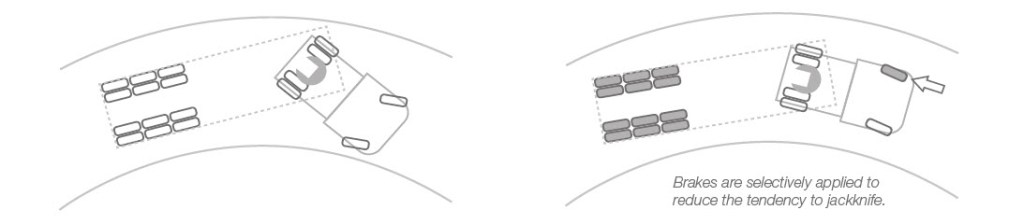
Anti-locking braking systems stop your wheels from locking up when you apply the brakes, this allows for the driver to maintain control without the vehicle skidding. While the ESC system is able to apply the brakes to individual wheels to help maintain stability, particularly when the truck is at risk of jackknifing or spinning. This is done by the system automatically reducing the engine throttle and selectively applying the trucks brakes.

Cal-Lift is your source for Kalmar Ottawa Terminal Tractors. Learn more about Kalmar’s Line-up of products, then contact us at 800-322-5438 for a demo and quote.

Keeping the Heat IN This Winter

Winter is upon us, which means increased energy expenses to keep your warehouse warm and productive. While Southern California is not as effected by colder weather as our friends on the east coast, we will still be turning on the heat and anything we can do to minimize the impact of that on our bottom is helpful to a profitable 2020.

The following steps are five of our top recommendations for reducing energy consumption without turning down the thermostat.

Ensure Efficient Heat Generation Processes

Whatever thermal system you use, now is the time to make sure it is up to date with regular maintenance. Keeping your system in good operating order extends its life and ensures that it operates at optimal efficiency. Meanwhile, a poorly maintained system—particularly a gas-fired one—can pose a significant safety risk.

Another area of concern is the quantity, type, and location of your heating units. If you have made any changes to your warehouse configuration since your HVAC system was installed, now would be a good time for consultation. Technology advances quickly, and you want to be sure your HVAC system is up-to-date with current technology to ensure efficiency and effectiveness.

Maintain Proper Air Circulation

We all know that heat rises, and 20-degree temperature variances between the warehouse floor and the typical 40-foot ceiling are not uncommon. Circulating warmth to the floor can save hundreds—if not thousands—of dollars each month during the winter. The best means to accomplish this is through large industrial ceiling fans.

Determining what size, how many, and where to install industrial ceiling fans is our specialty. Fans can save up to 30 percent of your heating costs and deliver positive ROI in less than two years in many applications. Contact us for more information on fans and how many you might need to improve your energy circulation.

Retain as Much Heat as Possible

If you operate a warehouse, you have doors—very large doors. Although it is impossible to eliminate heat exchanges with cold outdoor air, you can take specific steps to significantly reduce it. These steps are more cost-effective than you probably expect.

Insulated dock panel doors can help retain warm air. However, depending on the number of dock positions, investment in them can be prohibitively costly. Instead, consider an insulation kit for each door. Insulation kits are less expensive, provide an R-Value of 6.81, and are easy to install.

Gaps around your dock doors can also cause significant heat loss. Inspect the top, bottom, and both sides of each door. If you see daylight, you are losing energy. Weather stripping kits are available to fill these gaps. The kits include weather stripping for the perimeter of the door as well as a 5-inch double-loop bottom rubber astragal to ensure that doors close tightly at the bottom. In addition to preserving heat, the seals keep bugs and other debris outside your warehouse facility. Caulking and sealants available at your local DIY big box store can help improve retention of heat dramatically over the winter.

Dock seals or shelters are imperative for preventing tremendous heat loss during trailer loading and unloading. If you are running a high-traffic operation without seals or even with worn seals, tens of thousands of expensive BTUs can blow out the door each winter day. If your seals or shelters are in good condition, be sure each tractor trailer is backed up tight against them before the dock doors are opened. Many types of dock seals and shelters are available. We can help you choose the right ones for your doors and budget.

One final area we recommend assessing is your dock leveler. If you use pit-mounted levelers, it makes sense to ensure that the side and rear seals are in good condition. Worn seals on your dock leveler result in air infiltration. We can inspect your levelers and seals, and service or replace any that are worn

Install Windows and/or Skylights

Although it is not always practical depending on the construction of your warehouse (or if you own or lease it), we certainly recommend investigating ways to improve the natural light and heat generated by the sun! Strategically placed windows or skylights can dramatically reduce your warehouse energy costs during the winter not only by using the sun’s energy for heat, but also by improving the natural lighting in your warehouse. This reduces your reliance on lighting fixtures and further reduces your energy costs. Using retractable blinds allows you to close the windows during the summer months, which reduces heat generation when it is not required.

And if you facility has windows, consider replacing them with energy efficient windows that can provide better heat retention and help keep the cold air out. If your windows are more than 10 years old, chances are you can improve energy consumption with new, more efficient windows.

Use Air Curtains or High-Speed Doors to Segment Your Warehouse Energy Needs

Some areas of your warehouse may not be used by employees often, who do most of their work in other areas of your warehouse. These low-use areas can be kept much cooler than the areas that employees use most. Air curtains and high-speed doors are excellent ways to keep the two areas temperature controlled while dramatically decreasing your energy consumption.

Winter can be an expensive time for warehouse operators, but the right steps taken the right way can significantly reduce the negative impact to your bottom line. We can help you find the right products to ensure you’re maximizing the use of energy in your facility during the colder winter months. Contact us at 800-322-5438 to speak to one of our representatives.

CLARK S-Series Forklift “Smart-Dash”

Smart Dash is programmed to provide operators with real-time information and on-board diagnostics. The dash integrates with multiple truck options including optional backup camera, optional load weight scale, operator checklist and telematics. The dash intelligence also provides the ability to limit access for unauthorized operation of the truck or changing settings via password protection.

The optional Load Weight Scale will display the lifted load value on the main screen in large, easy to read text. The Smart Dash allows the customer to “tune” the truck to their specific requirements. The truck’s maximum speed can be set and password protected directly through the screen. Learn more about the S-Series.

The Flu, Its Cost and How to Avoid it

FluEach flu season in America, between 5% and 20% of American’s contract the flu. This leads to 111 million lost productive work days, which costs American business approximately 7 billion dollars! In addition, the direct costs (doctor’s visits, medication, hospitalization) cost individuals over 4.5 billion dollars a year! Source: CDC Whether it’s in your accounting department or forklift operators, you want to limit an outbreak at your company and contain any outbreak that does occur.

The effects of lost productivity can have a great effect on your ability to deliver products and services and provide customer service, which can lead to a negative impact on your bottom line. But there are things you can do to lower the risk at the department level and facility level. It all starts with planning and communication.

  1. Developing a plan to combat influenza? Businesses plan for all sorts of calamities and naturally occurring disasters. Does your company have a preparedness plan to prevent a flu outbreak? A tremendous amount of information is available to help you plan for and combat an outbreak of the flu a http://www.flu.gov/planning-preparedness/business/
  2. Educate your employees and take steps to encourage vaccination.One study showed a decrease in over 71% in hospitalizations when a flu vaccination was administered to adults of all ages (source). Flu vaccines not only reduce the chances of contracting the flu, but it also reduces the effects of the flu if an employee contracts it, thus enabling them to get back to full productivity sooner.
  3. Use Resources.The CDC has a great Business Tool Kit to help you educate your employees about the flu, how to prevent it and what to do if you think you are coming down with it. Visit the CDC Business Tool Kit Webapge.
  4. Proper sanitary proceduresare also essential during the flu season. Placing hand sanitizers throughout your facility and encouraging if not outright requiring their use will help contain the spread of the virus, should an employee become infected. There are additional steps you can take to prevent the spread of the flu, including increasing janitorial services or assigning teams to assist in the sanitization of routinely used and shared points, such as water fountains, door knobs/handles, bathrooms, and kitchens.
  5. Send them home!If an employee starts to show the signs of influenza, it’s important to remove them from the facility as soon as possible and require that they remain home until symptoms have subsided, particularly a fever.
  6. Seek immediate attention. If you or anyone around starts to feel fatigue, loss of appetite, lethargy, fever or any of the other first signs of the flu, get to a doctor and ask about anti-viral drugs. These drugs can cut your misery in half, as well as your time off work, and productivity.

The effects of flu season can be dramatic if left unaddressed. But developing a plan to deal with the flu and spreading education before the flu spreads itself around your facility will help you maintain your business productivity during this flu season.

Our focus is frequently on productivity, and this is not always about equipment and processes. Sometimes peripheral components can have an impact on our bottom lines, and it is important to us to serve as your partner in addressing all facts of productivity. We encourage you to visit the flu.gov site to learn more.

Forklift Fleet Optimization

TLI Forklift Fleet OptimizationPurchasing a new forklift or other material handling equipment can be expensive, but that’s just a fraction of what it costs to operate it efficiently, or inefficiently. Getting the most bang for your forklift buck means understanding the products you move and establishing baseline costs as a start. Here are 10 tips for optimizing your forklift fleet.
  1. Assess your fleet’s total cost. The cost of your forklift or material handling equipment is typically only about 20% of your total long-term cost. Find out what service is costing, parts, labor, break-downs, rentals, additional equipment kept on hand for break-downs, overtime resulting from down time etc… This can be a real eye opener.
  2. Optimize your forklift fleet by material flow. Determining what each piece of equipment is moving, where, when and how often can help you determine productivity and equipment choices. This way you can determine a lift truck’s cost per pallet move, rather than cost per operating hour.
  3. Find an integrated dealer that understands all facets of your business. Work with a company that not only sells equipment but understands all facets of material handling. These types of dealers can provide you with total solutions which encompass all the areas of your material handling operation.
  4. Get out of the service business. Get information and quotes for full maintenance leases from your dealer. You dealer knows your equipment better than you, and can maintain it to be more productive. Full maintenance takes the guess work out of total equipment operational costs by eliminating “surprise” repairs that often occur over time.
  5. If you perform your own service, look into parts programs. Parts availability is key to maintaining uptime, so an effective parts distribution network facilitated through a lift truck manufacturer and its local dealer is essential to keep your fleet running. Some dealers can provide parts for multiple brands and types of trucks. In addition, dealers will sometime consign parts to your facility, further improving your parts availability and uptime.
  6. Stay on top of equipment advancements. Like most facets of business, material handling advancements can improve your operation and productivity. Attend ProMat, stay connected with industry resources and work with a dealer that is on top of providing the latest in material handling products including forklifts, storage and retrieval and material moving equipment.
  7. Look into fleet management. Knowing the cost of operating equipment, where and how it is being utilized is key to allocation efficiency and productivity. Software programs are available that can provide you with this information. Work with a dealer that can provide these solutions to your operation.
  8. Invest in training early and often. Build a robust and active training program. Safety and productivity go hand in hand. Well trained operators and employees are proven to be more productive and safe. Training reduces your product and equipment damage costs, injury, insurance and many other latent costs of fleet and equipment operation.

Optimizing your materials handling operation takes a bit of work. However, working with an integrated materials handling partner will take a lot of the load off your shoulders and help you operate a more efficient and effective materials handling operation.

Give us a call at 800-322-LIFT to speak to one of our material handling professionals.

Maximizing Warehouse Space with Aislemaster

aisle-master-banner

The Aisle-Master VNA articulated forklift is the versatile lift truck that does it all. It works in narrow aisles to enable a dramatic reduction of working aisle widths in the warehouse.  This can increase the amount of storage space available by up to 50%. The Aisle-Master Very Narrow Aisle forklift is designed to work both inside and out, and can do the work of both reach and counterbalance forklifts for quicker operations. This reduces the number of trucks needed and cuts costs. AC electric and LPG powered models are available with lift capacities of up to 2.5t.

Easy Operation

The Aisle-Master couldn’t be easier to operate. The articulated design enables the operator to drive to the center of the pallet required, turn the steering, mast through 90 degrees and then drive directly into the pallet. The operator then simply reverses out while unwinding the steering wheel.

Indoors & Out

The Aisle-Master’s large super elastic tires and hydrostatic drive make light work of loading and off-loading in semi-rough yards, and ensure a smooth ride regardless of the terrain. Ramps or gradients are mastered effortlessly with the truck’s 67 horse power engine.

Safety & Comfort

Manufacturing standards at Aisle-Master have long been in accordance with the stringent USA regulations, with build quality and safety featuring uppermost on the company’s agenda. All the fundamental aspects of the Aisle-Master’s design, from the overhead guard for enhanced driver protection, the ergonomics of the controls, down to the high quality seating, guarantee the highest level of operator safety and comfort.

Low Maintenance

Aisle-Master’s hydrostatic drive system eliminates the problems associated with batteries and brake motors, further reducing maintenance and overall running costs.

Learn more about Aisle-Master at our website. Then contact us for more information or an Aisle-Master to fit your operation at 800-322-5438.

Tomptop2

Tomtop Inc., in City of Industry utilizes Aisle-Master forklifts from Cal-Lift to maximize warehouse space and decrease storage costs. Find out how you can save too by contacting us at 800-322-5438.

Purchase Price vs. Total Ownership Cost

When you are purchasing a piece of equipment, you obtain competitive quotes, verify specifications and generate a purchase order. For that matter, just about anything we purchase goes through the same process. However, there is much more to purchasing forklifts and other material handling equipment. We have found, over the years, that often there are variables that can greatly affect the total cost of ownership of anything, be it an automobile, forklift or a giant cargo container.

The price you pay for your piece of equipment, by most accounts, reflects about 10% of the total ownership costs of that piece of equipment. This leaves 90% of your total costs up in the air. Depending on many variables, you could pay much more for the equipment than you needed to, or much less. These variables include:

Performance and Reliability of Equipment – Comparing cost per hour to operate can give you a good idea of what competing pieces of equipment will cost you over their useful life. When comparing cost per hour to operate, you should be sure you’re comparing similar models under similar circumstances. A lift truck operating 1500 hours a year for a light weight product manufacturer will cost far less over its lifetime than the same lift truck operating at a recycling facility.  This cost should reflect general maintenance requirements as well as fuel costs.

Fuel Consumption – While this is often a part of performance and cost per hour, knowing the fuel costs for each comparing brand and calculating total costs over the life of the equipment can sometimes be quite an eye-opener. In addition, what are your fuel alternatives? Can you use electric models? Thinking outside the box may result in lower costs to power your forklift and other lift equipment.

Specifications vs. Operations – It is rare that two 5,000-lb-capacity forklifts from competing brands will have similar specifications. Knowing what your facility will accommodate and comparing that with each model will give you insight into how each model will perform, given your operating parameters. Factors include: aisle width vs. turn radius, draw bar pull, suspension and ergonomics compared to your floor condition, indoor/outdoor use and ceiling height/rack height vs. max lift height. You will also want to compare features between brands to ensure that each lift truck model is equipped with the proper components to meet your operational requirements. For example: Can it operate properly inside your ice cream freezer?

Ergonomics – A comfortable and smooth-running piece of equipment will provide you with increased productivity. These are costs hidden in equipment that are quite real in daily operating conditions. How much time and research and development, does each brand put into the comfort and ease of use of their equipment? Happy, comfortable operators are simply more productive.

Safety – Never underestimate the safety features of your equipment. What equipment is being specified and what equipment is optional from each manufacturer is very important to know.  Reducing your accident costs or product/facility damage can make a big difference in your total fleet operational expenses.

Useful Life – Finally, how many hours can you expect from each piece of equipment until the cost to operate becomes cost-prohibitive? This can vary widely depending upon brand and model. But having some qualitative and quantitative information on hand, if possible, will help you make a better decision about the total cost of operating each unit/model.

There are many factors beyond price tag or lease rate that can help you make good decisions about the equipment you purchase. Having a partner that listens, evaluates and fulfills your needs is essential in building a fleet that is most productive and less costly in the long run. Contact us at 800-322-5438 to speak to one of our material handling professionals about the right material handling equipment for your operation.