Kalmar T2 EV Electric Terminal Tractor

Kalmar Ottawa’s third generation of electric terminal trucks or yard trucks will help improve the eco-efficiency of your operations while maintaining the highest levels of productivity and safety. With a range of modular battery options and charging solutions, we can work with you to design a solution that will deliver for your yard, terminal or distribution centre.

Eco efficiency built in

Your electric terminal tractor will produce zero carbon emission at source, making them cleaner and safer to operate in your yard, terminal or distribution centre. Getting an electrically powered yard truck is only the start of your eco-efficient journey. One that we will be with you every step of the way.

Three big benefits

There are three distinct differences and many small ones to our new generation of electric terminal tractors for you to benefit from:

  1. Charge times reduced. Our first big change has been to incorporate a DC FastChargeTM System, which has allowed us to decrease our charge time significantly.
  2. Electric motor. The second is that we have eliminated the transmission from the driveline, moving to a direct drive solution where the electric motor is powering the drive axle, reducing the complexity of the driveline.
  3. Ability to operate in extreme temperatures. Thirdly, we have included an Active Thermal Management System, which will allow your electric terminal tractor to operate optimally at full power in extreme temperatures. The system keeps your core battery temperature between 77-86˚F for optimal performance even when the temperature outside gets down to -22˚F or up to 122˚F.

When all brought together you have the Kalmar Ottawa T2 EV Electric Terminal Tractor which can be charged quickly and easily, will operate optimally in extreme weather conditions, is easier to service and maintain.

Modular by design

Batteries and chargers are a big part of your overall investment in your electrically powered yard  truck  making it critical that you get a solution that is matched to your operational requirements, which is why Kalmar has taken a modular approach to our battery and charging solutions. 

There are different charging solutions available with charging capacities up to 150kW and three different Li-ion battery capacities to choose from. 

Our battery solutions all come with a 6 year/2800 charge cycle warranty*. Kalmar can help you work out which battery option and charging solution is right for your business based on your current work cycles.

Managing your power

Kalmar’s Battery Monitoring System continually monitors the voltage, temperature, coolant and current flow of your battery solution to ensure that it operates optimally over its lifetime. This system also controls the charging of the batteries by utilizing regenerative breaking, sending recovered energy back into the battery packs making sure you are using the power available as efficiently as possible.

Our battery solutions all come with a 6 year/2800 charge cycle warranty*. Kalmar can help you work out which battery option and charging solution is right for your business based on your current work cycles.

*First life measured as 80% capacity left in the battery.

For complete peace of mind.

All Kalmar Electric Terminal Tractors come with a 3 year/6500 hour warranty on major electric components, and a 6 year warranty on the batteries. Kalmar Ottawa also offers a full range of service packages and genuine parts to keep your terminal tractor operating optimally, thus minimizing downtime.

Link to Kalmar webpage to learn more about the T2 EV

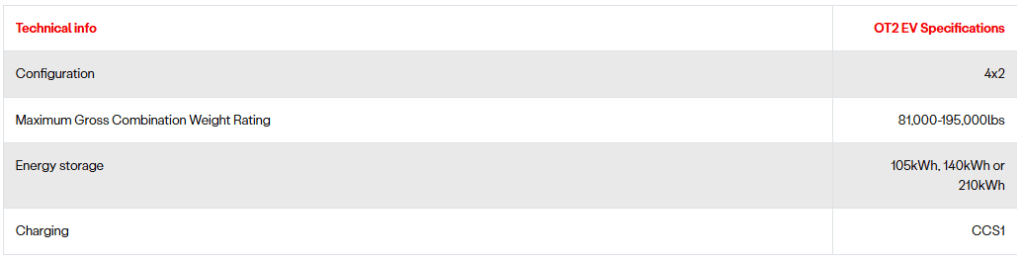
Kalmar T2 EV Technical Information
Take the T2 EV for a Test Drive!

For more information, a demo or pricing on a new Kalmar T2 EV, please contact us at 800-322-5438. Cal-Lift is your source in California, Arizona and Nevada for Kalmar equipment, service, rentals and parts.

Section 179 for 2023 at a Glance

What is the Section 179 Deduction

Most people think the Section 179 deduction is some mysterious or complicated tax code. It really isn’t, as you will see below.

Essentially, Section 179 of the IRS tax code allows businesses to deduct the full purchase price of qualifying equipment and/or software purchased or financed during the tax year. That means that if you buy (or lease) a piece of qualifying equipment, you can deduct the FULL PURCHASE PRICE from your gross income. It’s an incentive created by the U.S. government to encourage businesses to buy equipment and invest in themselves.

How Section 179 works:

In years past, when your business bought qualifying equipment like a forklift, terminal tractor or container handler, (see our line-up) it typically wrote it off a little at a time through depreciation. In other words, if your company spends $50,000 on a machine, it gets to write off (say) $10,000 a year for five years (these numbers are only meant to give you an example).

Now, while it’s true that this is better than no write-off at all, most business owners would really prefer to write off the entire equipment purchase price for the year they buy it.

And that’s exactly what Section 179 does – it allows your business to write off the entire purchase price of qualifying equipment for the current tax year.

This has made a big difference for many companies (and the economy in general.) Businesses have used Section 179 to purchase needed equipment right now, instead of waiting. For most small businesses, the entire cost of qualifying equipment can be written-off on the 2023 tax return (up to $1,160,000). See example below.

Limits of Section 179

Section 179 does come with limits – there are caps to the total amount written off ($1,160,000 for ), and limits to the total amount of the equipment purchased ($2,890,000 in ). The deduction begins to phase out on a dollar-for-dollar basis after $2,890,000 is spent by a given business (thus, the entire deduction goes away once $4,050,000 in purchases is reached), so this makes it a true small and medium-sized business deduction.

Who Qualifies for Section 179?

All businesses that purchase, finance, and/or lease new or used business equipment during tax year 2023 should qualify for the Section 179 Deduction (assuming they spend less than $4,050,000).

Most tangible goods used by American businesses, including “off-the-shelf” software and business-use vehicles (restrictions apply) qualify for the Section 179 Deduction.

For basic guidelines on what property is covered under the Section 179 tax code, please refer to this list of qualifying equipment. Also, to qualify for the Section 179 Deduction, the equipment and/or software purchased or financed must be placed into service between January 1, 2023 and December 31, 2023.

For 2023, $1,160,000 of assets can be expensed; that amount phases out dollar for dollar when $2,890,000 of qualified assets are placed in service.

What’s the difference between Section 179 and Bonus Depreciation?

Bonus depreciation is offered some years, and some years it isn’t. Right now in 2023, it’s being offered at 80%.

The most important difference is both new and used equipment qualify for the Section 179 Deduction (as long as the used equipment is “new to you”), while Bonus Depreciation has only covered new equipment only until the most recent tax law passed. In a switch from recent years, the bonus depreciation now includes used equipment.

Bonus Depreciation is useful to very large businesses spending more than the Section 179 Spending Cap (currently $2,890,000) on new capital equipment. Also, businesses with a net loss are still qualified to deduct some of the cost of new equipment and carry-forward the loss.

When applying these provisions, Section 179 is generally taken first, followed by Bonus Depreciation – unless the business had no taxable profit, because the unprofitable business is allowed to carry the loss forward to future years.

Section 179’s

The equipment, vehicle(s), and/or software must be used for business purposes more than 50% of the time to qualify for the Section 179 Deduction. Simply multiply the cost of the equipment, vehicle(s), and/or software by the percentage of business-use to arrive at the monetary amount eligible for Section 179.

To take advantage of Section 179 for 2023, equipment must be in service by year’s end, so now is the time to act. Contact us at 800-322-5438 for equipment pricing and calculate your tax savings for 2023.

Four Traits of Safety-Minded Companies

As managers and owners, we want a safe work environment for all of our employees. Unfortunately, all too often it escapes us. Time passes quickly, and initiatives that were once important standards become guidelines or even merely suggestions. How can we ensure that when we put safety measures in place, they will stay in place as employees come and go in a business climate that is constantly in flux?

While we lack the space to answer this question in full detail here, there are a few major approaches to providing a safe work environment that transcend industries, equipment and facilities. We outline these “hows and whys” of workplace safety below.

Since 1970, OSHA has worked to create a safer workplace for all employees, and their mission has been very successful. However, accidents still happen, and not only at companies willfully violating OSHA standards. Sometimes safety goes beyond meeting standards due to unique circumstances in certain operations.

The following are a few approaches to safety that have helped both large and small companies to achieve better workplace safety, fewer incidents and accidents, lower costs, more productivity and better workplace attitudes.

Safety is integrated with company mission

Safe companies put as much emphasis on doing things safely as on doing them productively. From day one, every employee knows they are working for a company that would rather they do their job safely than quickly. These employees will lockout a piece of equipment when something goes wrong, will replace light bulbs that need it instead of ignoring them and will report unsafe behavior or unsafe conditions.

Training never ends

Employees are involved in ongoing training – how to lift more safely, how to sit properly in a chair, how to operate a certain piece of equipment and so on. Your business is fluid: things change; equipment changes; and equipment, building space and employees are added. As your conditions change, your training must address these changes. Training for the safest work environments is never a one-time event or a two- or three-day training initiation. It is an ongoing pursuit of the safest possible work facility. It should be a goal of all employees to see that their coworkers go home safe every night.

Involvement at all levels

While involvement in a safe work environment must start from the corner office, the mission and strategy it is also important to ensure that every employee knows that they are involved and responsible. It is a good idea to create safety teams for every facet of your business, to revolve people in and out of those teams, and to have them conduct frequent facility or department reviews to identify potential threats. The most successful companies have reward systems for reporting anything that could be a potential threat, even if it is as minor as a sharp corner on a coat rack. This keeps all employees engaged in creating a safe work environment.

Accountability

Once you have established your safety mission and mapped out your strategy, everyone involved must be held accountable. No one can shirk their safety responsibilities. If a sharp corner on a coat rack is missed and someone gets cut, find out why no one noticed. Are they doing regular inspections? If safety standards are not being met, it is the leadership’s job to find out why and fix it. Everyone must know that if an accident happens on their watch, it must be accounted for and a plan must be designed to ensure that it will not happen again.

A truly safe, productive and profitable workplace is attained through ongoing efforts, and these are just a few of the major traits of successful organizations. We encourage you to seek the assistance of OSHA, NIOSH or other private safety consultants to help you organize and strategize your safety plans.

At Cal-Lift we believe it is one of our primary responsibilities to ensure that we all get home safe to our families each and every day.

Kalmar Ottawa T2E Electric Terminal Tractor

Kalmar’s second generation of electrically powered terminal tractors, (also known as yard trucks) are available globally and will help improve the eco-efficiency of your operations while maintaining the highest levels of productivity and safety. With a range of modular battery options and charging solutions, we can work with you to design a solution that will deliver for your business.

What makes this the best electrically powered terminal tractor?

There are three big differences, and many small ones, that make our new generation of electrically powered terminal tractors the best. You will benefit from:

Charging time cut in half. Our first big change has been to incorporate a DC FastCharge System, which has allowed us to cut charging time in half.

No more transmission. The second is that we have removed the transmission from the driveline, moving to a direct drive solution where the electric motor powers the drive axle, reducing the complexity of the driveline.

Ability to operate in extreme temperatures. Thirdly we have included an Active Thermal Management System, which will allow your electric terminal tractor to operate optimally at full power in extreme temperatures.

What models are available?

There are five models available for you to choose from:

  • three specifically designed for distribution applications (including an on-road certified version available for North America – DOT approved)
  • two for container ports and terminals


Do I get a choice of batteries and chargers?

  • There are two different charging solutions available with charging capacities of 24-180kW.
  • Either 152kWh or 184kWh batteries.

How eco-efficient is an electric terminal tractor?

Being electrically powered, your terminal tractor (also know as yard truck) will produce zero carbon emission at source, reducing your carbon footprint and improving your environmental credentials. You can cut your carbon emissions even further by using green energy sources where available or start to generate and use your own power. Getting an electrically powered terminal tractor is only the start of your eco-efficient journey. And we will be with you every step of the way.

Does your warranty extend to batteries and chargers?

All Kalmar Ottawa Electric Terminal Tractors come with a standard 2 year/6000 hour warranty and a 7 year/1000 warranty hour for the frame. Charging solutions are covered for 2 years and batteries for up to 5 years. Kalmar also offers a full range of service packages and genuine parts to keep your terminal tractor operating optimally, minimising downtime and maximising availability levels.

What is the difference between a Terminal Tractor, Yard Truck or Shunt Truck?

Yard Trucks, Shunt Trucks and Terminal Tractors are exactly the same machine used for cargo handling at distribution, ports and terminals and industrial facilities. These are just the different names that are used in different parts of the world. At Kalmar we refer to them as Kalmar Terminal Tractors globally.

See our complete line-up of Kalmar Ottawa Terminal Tractors at our website.

Kalmar Electronic Stability Control

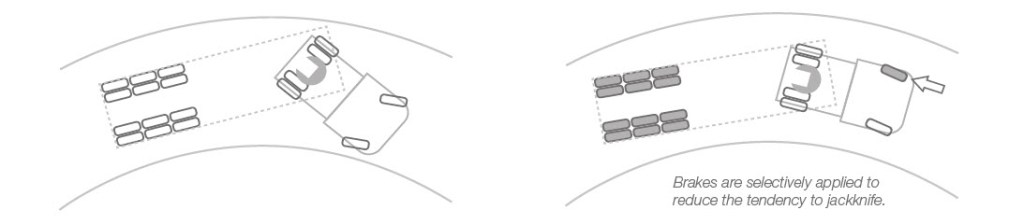
To comply with the standards set by the Department of Transport and the National Highway Traffic Safety Association for trucks that operate in approved applications, all new Kalmar Ottawa T2 Terminal Tractors can be equipped with an optional Electronic Stability Control system.

This added safety feature ensures safer load handling and is the first of its kind in the Terminal Tractor industry. When you order a new DOT/EPA compliant Kalmar Ottawa T2 Terminal Tractor with either a 116”, 126” or 136” wheelbase our new Electronic Stability Control (ESC) system can be fitted as an option. 

Enhanced Safety

Your new DOT/EPA compliant diesel truck not only can be fitted with ESC, it also has an Anti-Lock Braking System
(ABS) and a Traction Control System fitted. Making your truck even safer when being operated on public roads.

What is the Difference Between ABS and ESC?

Anti-locking braking systems stop your wheels from locking up when you apply the brakes, this allows for the driver to maintain control without the vehicle skidding. While the ESC system is able to apply the brakes to individual wheels to help maintain stability, particularly when the truck is at risk of jackknifing or spinning. This is done by the system automatically reducing the engine throttle and selectively applying the trucks brakes.

Cal-Lift is your source for Kalmar Ottawa Terminal Tractors. Learn more about Kalmar’s Line-up of products, then contact us at 800-322-5438 for a demo and quote.