5 Main Benefits of Planned Maintenance

Like anything else in life, whether it’s your car, your home or even your body, planning and conducting preventive maintenance creates long-term benefits that are well worth the investment. Why would your forklift and other materials handling equipment be any different?

There are many benefits of properly maintaining your forklift fleet and other equipment. However, we have recognized five major benefits that our customers have enjoyed. Planned Maintenance has been proven to:

Lower Your Maintenance Costs
Proactive and preventive maintenance has proven to lower costs by catching small service issues before they blossom into giant repair headaches. Replacing worn or damaged parts early decreases the likelihood of breakdowns.

Improve Useful Equipment Life
Equipment that is serviced regularly does not have to be “turned over” as frequently. This lowers your equipment costs over time.

Increased Productivity
Equipment that is well maintained does not break down. This improves productivity as well as your
bottom line performance. And equipment that is well maintained performs better and more efficiently

Increase Residual Values
When you trade-in your forklifts, or sell it to purchase new equipment, well maintained equipment
has proven to have higher values than equipment serviced on an “as needed” basis.

Enhance Facility Safety
Equipment failures can have catastrophic consequences. Properly maintaining your forklifts will improve operator safety, as well as those that work around your equipment.

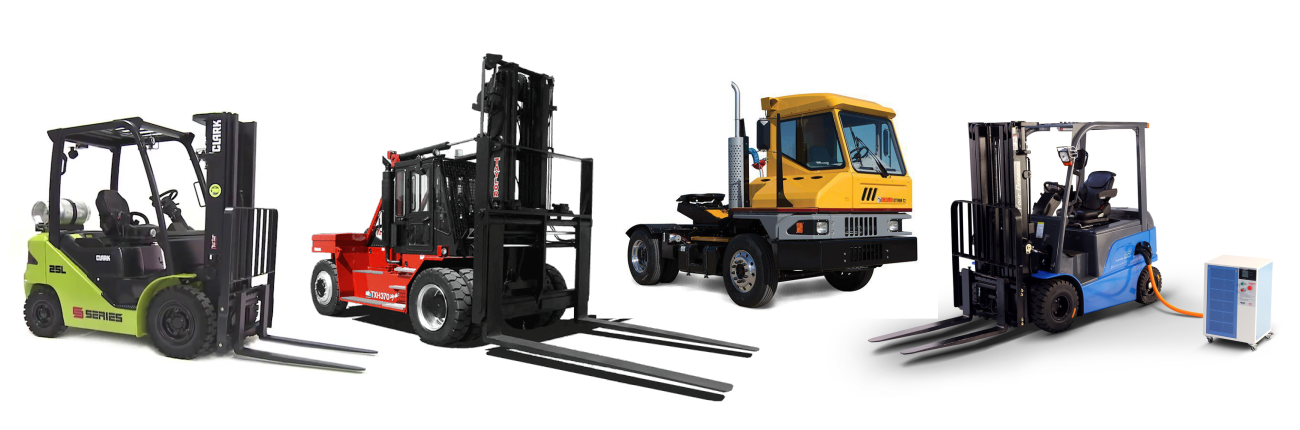
Having the right partner in maintaining your equipment is as important as selecting the right doctor for the maintenance of your health. Our trained, experienced technicians perform thousands of Planned Maintenance service calls each year. Whether we’re servicing a giant Taylor Machine Works container handler a forklift or terminal tractor, you can count on our professional staff to minimize your downtime and maximize your productivity.

Learn more about Cal-Lift’s service capabilities, then Contact Us or give us a call at 800-322-5438 for a plan tailored to your equipment and operation.

Four Traits of Safety Minded Companies

When companies are safety-minded these are four things that almost all of them do proactively to ensure a safe operation.
As managers and owners, we want a safe work environment for all of our employees. Unfortunately, all too often it escapes us. Time passes quickly, and initiatives that were once important standards become guidelines or even merely suggestions. How can we ensure that when we put safety measures in place, they will stay in place as employees come and go in a business climate that is constantly in flux?While we lack the space to answer this question in full detail here, there are a few major approaches to providing a safe work environment that transcend industries, equipment and facilities. We outline these “hows and whys” of workplace safety below.

Since 1970, OSHA has worked to create a safer workplace for all employees, and their mission has been very successful. However, accidents still happen, and not only at companies willfully violating OSHA standards. Sometimes safety goes beyond meeting standards due to unique circumstances in certain operations.

The following are a few approaches to safety that have helped both large and small companies to achieve better workplace safety, fewer incidents and accidents, lower costs, more productivity and better workplace attitudes.

Safety is integrated with company mission – Safe companies put as much emphasis on doing things safely as on doing them productively. From day one, every employee knows they are working for a company that would rather they do their job safely than quickly. These employees will lockout a piece of equipment when something goes wrong, will replace light bulbs that need it instead of ignoring them and will report unsafe behavior or unsafe conditions.

Training never ends – Employees are involved in ongoing training – how to lift more safely, how to sit properly in a chair, how to operate a certain piece of equipment and so on. Your business is fluid: things change; equipment changes; and equipment, building space and employees are added. As your conditions change, your training must address these changes. Training for the safest work environments is never a one-time event or a two- or three-day training initiation. It is an ongoing pursuit of the safest possible work facility. It should be a goal of all employees to see that their coworkers go home safe every night.

Involvement at all levels
 – While involvement in a safe work environment must start from the corner office, the mission and strategy it is also important to ensure that every employee knows that they are involved and responsible. It is a good idea to create safety teams for every facet of your business, to revolve people in and out of those teams, and to have them conduct frequent facility or department reviews to identify potential threats. The most successful companies have reward systems for reporting anything that could be a potential threat, even if it is as minor as a sharp corner on a coat rack. This keeps all employees engaged in creating a safe work environment.

Accountability – Once you have established your safety mission and mapped out your strategy, everyone involved must be held accountable. No one can shirk their safety responsibilities. If a sharp corner on a coat rack is missed and someone gets cut, find out why no one noticed. Are they doing regular inspections? If safety standards are not being met, it is the leadership’s job to find out why and fix it. Everyone must know that if an accident happens on their watch, it must be accounted for and a plan must be designed to ensure that it will not happen again.

A truly safe, productive and profitable workplace is attained through ongoing efforts, and these are just a few of the major traits of successful organizations. We encourage you to seek the assistance of OSHA, NIOSH or other private safety consultants to help you organize and strategize your safety plans.

If there is anything we can help you with in regard to your equipment and its operators, please contact us at 800-322-5438. We would be happy to assist you!

Planned Maintenance as Part of Your Safety Program

CLARKMaintenance smallLike anything else in life, whether it’s your car, your home or even your body, planning and conducting preventive maintenance creates long-term benefits that are well worth the investment. Why would your forklift and other materials handling equipment be any different?

Having your forklifts regularly serviced reduces the likelihood of component failure, which improves the safety of not only your forklift fleet, but anyone that works around them.

There are many benefits of properly maintaining your forklift fleet and other equipment. However, we have recognized five major benefits that our customers have enjoyed.

Planned Maintenance has been proven to:

Lower Your Maintenance Costs – Proactive and preventive maintenance has proven to lower costs by catching small service issues before they blossom into giant repair headaches.

Improve Useful Equipment Life – Equipment that is serviced regularly does not have to be “turned over” as frequently. This lowers your equipment costs over time.

Increased Productivity – Equipment that is well maintained does not break down. This improves productivity as well as your bottom line performance.

Increase Residual Values – When you trade-in your equipment, or sell it to purchase new equipment, well maintained equipment has proven to have higher values than equipment serviced on an “as needed” basis.

Enhance Facility Safety – Equipment failures can have catastrophic consequences. Properly maintaining your equipment will improve operator safety, as well as those that work around your equipment.

Having the right partner in maintaining your equipment is as important as selecting the right doctor for the maintenance of your health. Our trained, experienced technicians perform thousands of Planned Maintenance service calls each year.

Get more information or a quote on a Planned Maintenance program for your material handling equipment.

CLARK S-Series Forklift “Smart-Dash”

Smart Dash is programmed to provide operators with real-time information and on-board diagnostics. The dash integrates with multiple truck options including optional backup camera, optional load weight scale, operator checklist and telematics. The dash intelligence also provides the ability to limit access for unauthorized operation of the truck or changing settings via password protection.

The optional Load Weight Scale will display the lifted load value on the main screen in large, easy to read text. The Smart Dash allows the customer to “tune” the truck to their specific requirements. The truck’s maximum speed can be set and password protected directly through the screen. Learn more about the S-Series.

The Flu, Its Cost and How to Avoid it

FluEach flu season in America, between 5% and 20% of American’s contract the flu. This leads to 111 million lost productive work days, which costs American business approximately 7 billion dollars! In addition, the direct costs (doctor’s visits, medication, hospitalization) cost individuals over 4.5 billion dollars a year! Source: CDC Whether it’s in your accounting department or forklift operators, you want to limit an outbreak at your company and contain any outbreak that does occur.
The effects of lost productivity can have a great effect on your ability to deliver products and services and provide customer service, which can lead to a negative impact on your bottom line. But there are things you can do to lower the risk at the department level and facility level. It all starts with planning and communication.

  1. Developing a plan to combat influenza? Businesses plan for all sorts of calamities and naturally occurring disasters. Does your company have a preparedness plan to prevent a flu outbreak? A tremendous amount of information is available to help you plan for and combat an outbreak of the flu a http://www.flu.gov/planning-preparedness/business/
  2. Educate your employees and take steps to encourage vaccination.One study showed a decrease in over 71% in hospitalizations when a flu vaccination was administered to adults of all ages (source). Flu vaccines not only reduce the chances of contracting the flu, but it also reduces the effects of the flu if an employee contracts it, thus enabling them to get back to full productivity sooner.
  3. Use Resources.The CDC has a great Business Tool Kit to help you educate your employees about the flu, how to prevent it and what to do if you think you are coming down with it. Visit the CDC Business Tool Kit Webapge.
  4. Proper sanitary proceduresare also essential during the flu season. Placing hand sanitizers throughout your facility and encouraging if not outright requiring their use will help contain the spread of the virus, should an employee become infected. There are additional steps you can take to prevent the spread of the flu, including increasing janitorial services or assigning teams to assist in the sanitization of routinely used and shared points, such as water fountains, door knobs/handles, bathrooms, and kitchens.
  5. Send them home!If an employee starts to show the signs of influenza, it’s important to remove them from the facility as soon as possible and require that they remain home until symptoms have subsided, particularly a fever.
  6. Seek immediate attention. If you or anyone around starts to feel fatigue, loss of appetite, lethargy, fever or any of the other first signs of the flu, get to a doctor and ask about anti-viral drugs. These drugs can cut your misery in half, as well as your time off work, and productivity.

The effects of flu season can be dramatic if left unaddressed. But developing a plan to deal with the flu and spreading education before the flu spreads itself around your facility will help you maintain your business productivity during this flu season.

Our focus is frequently on productivity, and this is not always about equipment and processes. Sometimes peripheral components can have an impact on our bottom lines, and it is important to us to serve as your partner in addressing all facts of productivity. We encourage you to visit the flu.gov site to learn more.

Forklift Tax Deductions Still in Play, But Time is Running Out

Section 179 Header

Under 2018 Section 179 rules, first-year bonus depreciation has been expanded to include used equipment bought and placed in service after September 27, 2017. The first-year bonus deduction for all qualified equipment also increased from 50 percent to 100 percent of its cost.

Another provision of the new tax law increased the maximum depreciation deduction on section 179 property from $500,000 to $1 million and increased the cap on the equipment purchases from $2 million to $2.5 million. Those changes took effect December 31, 2017, according to the Internal Revenue Service. Under section 179, equipment purchases are treated as an expense and deducted from income.

Both section 179 and bonus depreciation allow 100 percent write-off of the cost of used equipment in the first year. Both also stipulate the equipment must be put into use in the year the purchaser takes the deduction.

But remember, in order to take advantage of these significant tax savings for 2018, you MUST acquire your equipment and PLACE IT INTO SERVICE by midnight December 31, 2018. Learn more about Section 179 at www.section179.org.

Now is the best time to save BIG in 2018 on a new forklift , aerial lift, sweeper, scrubber or commercial vehicle from Cal-Lift Inc. Give us a call for a quote today at 800-322-LIFT.

Cal Lift Montage


CLARK Force-Cooled Wet Disc Brakes

The CLARK S-SERIES lift truck features Force-Cooled Wet Disc Brakes as standard equipment. The S-SERIES lift truck was designed with Force-Cooled Wet Disc Brakes to help the overall strength of the lift truck as well as to lower operator fatigue.

Learn more about the CLARK S-Series forklift at our website

CLARK S-Series Forklift FRAME Video

The CLARK S-SERIES lift truck is Built To Last® from the ground up. Durability of CLARK’s S-SERIES begins with the frame of the lift truck. That durability comes from features such as a one-piece fully-welded frame, heavy gauge steel, 5/8 inch thick durable fenders, integral tie-downs and more. See our S-Series line-up in our CLARK forklifts showroom.