Time for Section 179 Tax Savings is Running Our for 2025, But It’s Not Too Late

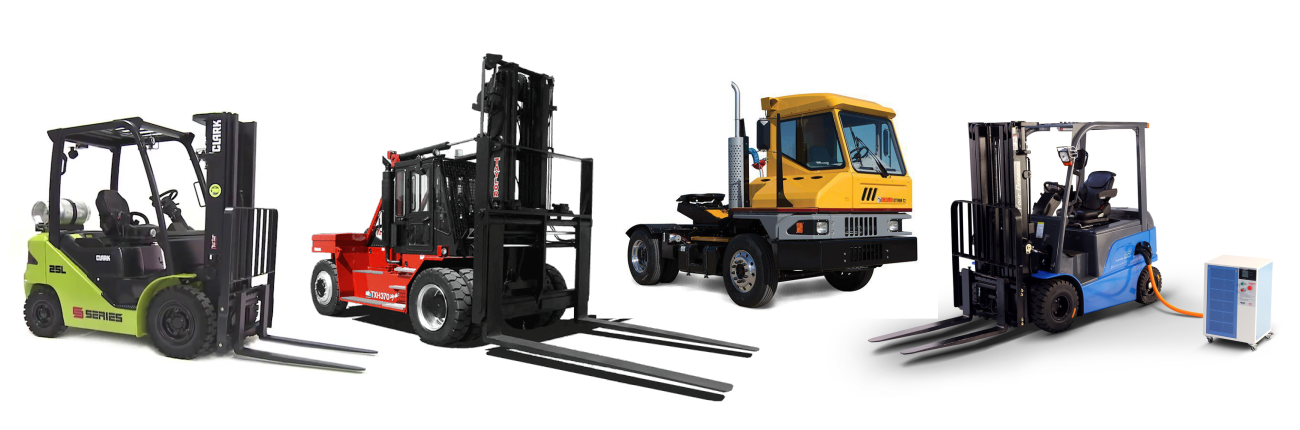
Investing in forklifts, terminal tractors, container handlers and other material-handling equipment is a necessity for warehouse, manufacturing, distribution and port operations. But in 2025, thanks to favorable tax rules, such purchases can also deliver a powerful tax benefit right away: Section 179 expensing (plus bonus depreciation).

Below, we will explain:

  • What Section 179 is, in simple terms
  • How it applies specifically to forklifts and material-handling equipment
  • The 2025 limits and mechanics you need to be aware of
  • The benefits — and some cautions — of using Section 179 for forklift purchases

What Is Section 179?

Under U.S. tax law, “Section 179” is a provision that allows a business to deduct (i.e. “expense”) the cost of certain qualifying property in the year it is placed in service — rather than capitalizing the cost and writing it off gradually through depreciation over many years.

Ordinarily, most machinery or equipment would be subject to depreciation (for example, over 5 or 7 years, using the Modified Accelerated Cost Recovery System, MACRS). Section 179 lets you “front-load” that deduction, within limits, so you get more tax benefit right away.

Because the tax code also provides bonus depreciation (or “special depreciation allowances”), many businesses combine Section 179 and bonus depreciation to immediately write off 100% of the cost in the first year, provided certain rules are satisfied.

Why Forklifts, Terminal Tractors, Container Handlers and Material-Handling Equipment Qualify

Forklifts, lift trucks, warehouse racking, conveyors, loading dock equipment, terminal tractors, container handlers and similar material-handling machinery are generally tangible property used in business operations. Because they are “property used in a trade or business,” they often qualify for Section 179 expensing.

Key points:

  1. New or used are both eligible (if “new to you”)
    The equipment doesn’t necessarily need to be brand new — a used forklift may qualify, as long as it was not previously in your books and is used predominantly for business purposes.
  2. Business use requirement
    The forklift must be used more than 50% for business. If there’s any personal or non-business use, you must allocate accordingly.
  3. “Placed in service” in the tax year
    The purchase (or financing) must occur, and the equipment must be ready to use (i.e. installed, operational) by December 31 of the tax year in question.
  4. Within overall limits
    There are ceilings to how much total Section 179 deduction you can take in a year. Also, if your total qualifying purchases exceed a threshold, the deduction begins to phase out.

Thus, for many businesses purchasing related equipment, Section 179 (plus bonus depreciation) offers a way to deduct large capital outlays immediately, rather than stretching them over years.

How the Deduction Works in Practice (Example)

To illustrate, let’s run through a hypothetical scenario. (This is illustrative only; consult your tax advisor for your numbers.)

  • Your business buys new equipment for $100,000 in 2025.
  • You use it 100% for business.
  • You have not met the Section 179 cap, and your total qualifying equipment purchases are below the phase-out threshold.

Step 1: Elect Section 179
You apply Section 179 to deduct, say, the full $100,000 (or a portion, depending on your other asset purchases and your taxable business income).

Step 2: Bonus Depreciation
Because Bonus Depreciation is 100%, any remaining basis (if any) may also be deducted immediately, essentially allowing a full first-year expensing.

Result:
You deduct the full $100,000 in 2025, reducing your taxable income (and your tax liability) in that year, instead of spreading depreciation over 5–7 years under MACRS.

Without Section 179 + bonus depreciation, you might have been limited to a smaller first-year depreciation (e.g. a fraction under MACRS), with the balance spread over future years.

Imagine your tax rate is 25%. That $100,000 deduction saves you $25,000 in taxes now (assuming you have sufficient taxable income). And because you got the deduction sooner, you keep more of that cash to reinvest in operations, maintenance, or additional equipment.

Benefits of Using Section 179

Here are the main advantages:

  1. Immediate tax relief
    Rather than waiting years to depreciate equipment, you can significantly reduce your tax burden in the year of purchase. That’s cash you can use earlier.
  2. Improved cash flow
    Because your tax liability is lower, you retain more liquidity to invest back into operations.
  3. Incentive to modernize/upgrade fleets
    The tax code is encouraging capital investment — making it more financially compelling to replace older, less efficient forklifts.
  4. Simplicity & flexibility
    You choose how much of your eligible purchases to expense under Section 179 (i.e. you don’t have to take the maximum).
  5. Used equipment qualifies
    You can apply Section 179 to used forklifts, terminal tractors or container handlers, which helps small or growing operations invest more affordably.
  6. Stacking with bonus depreciation
    Because bonus depreciation is 100% in 2025, you can often deduct the entire cost, even beyond the Section 179 cap (subject to rules).

Things to Watch Out For / Potential Risks

While Section 179 offers a strong incentive, there are pitfalls or constraints to be aware of:

  • Income limitation
    Your Section 179 deduction cannot exceed your business’s taxable income from active operations. If you don’t have enough income, unused deduction may carry forward.
  • Phase-out / cap on total purchases
    If your total qualifying purchases exceed the phase-out threshold, your Section 179 deduction is reduced.
  • Recapture rules
    If your business usage of the equipment falls below 50% in later years, or if you sell the equipment prematurely, some of the deduction may be “recaptured” (i.e. added back to income) in those later years.
  • State conformity
    Some states do not fully conform to the federal Section 179 and bonus depreciation rules. You might not get the same benefit on your state tax return. (Always check your state laws.)
  • Proper documentation
    You need to maintain good records: purchase invoices, installation, date placed in service, percentage of business use, logs, etc. The IRS may ask for proof.
  • Mind the year-end timing
    To qualify, the equipment must be placed in service by December 31. Delays in delivery, installation, or setup could jeopardize eligibility for the tax year.

We always recommend you consult your own tax professional to ensure you receive all the benefits of Section 179 and that your business qualifies for the benefits.

Visit our website to see our selection of new and used forklifts, terminal tractors and container handlers. For more information or pricing, contact us at 800-322-5438.

Section 179 for 2023 at a Glance

What is the Section 179 Deduction

Most people think the Section 179 deduction is some mysterious or complicated tax code. It really isn’t, as you will see below.

Essentially, Section 179 of the IRS tax code allows businesses to deduct the full purchase price of qualifying equipment and/or software purchased or financed during the tax year. That means that if you buy (or lease) a piece of qualifying equipment, you can deduct the FULL PURCHASE PRICE from your gross income. It’s an incentive created by the U.S. government to encourage businesses to buy equipment and invest in themselves.

How Section 179 works:

In years past, when your business bought qualifying equipment like a forklift, terminal tractor or container handler, (see our line-up) it typically wrote it off a little at a time through depreciation. In other words, if your company spends $50,000 on a machine, it gets to write off (say) $10,000 a year for five years (these numbers are only meant to give you an example).

Now, while it’s true that this is better than no write-off at all, most business owners would really prefer to write off the entire equipment purchase price for the year they buy it.

And that’s exactly what Section 179 does – it allows your business to write off the entire purchase price of qualifying equipment for the current tax year.

This has made a big difference for many companies (and the economy in general.) Businesses have used Section 179 to purchase needed equipment right now, instead of waiting. For most small businesses, the entire cost of qualifying equipment can be written-off on the 2023 tax return (up to $1,160,000). See example below.

Limits of Section 179

Section 179 does come with limits – there are caps to the total amount written off ($1,160,000 for ), and limits to the total amount of the equipment purchased ($2,890,000 in ). The deduction begins to phase out on a dollar-for-dollar basis after $2,890,000 is spent by a given business (thus, the entire deduction goes away once $4,050,000 in purchases is reached), so this makes it a true small and medium-sized business deduction.

Who Qualifies for Section 179?

All businesses that purchase, finance, and/or lease new or used business equipment during tax year 2023 should qualify for the Section 179 Deduction (assuming they spend less than $4,050,000).

Most tangible goods used by American businesses, including “off-the-shelf” software and business-use vehicles (restrictions apply) qualify for the Section 179 Deduction.

For basic guidelines on what property is covered under the Section 179 tax code, please refer to this list of qualifying equipment. Also, to qualify for the Section 179 Deduction, the equipment and/or software purchased or financed must be placed into service between January 1, 2023 and December 31, 2023.

For 2023, $1,160,000 of assets can be expensed; that amount phases out dollar for dollar when $2,890,000 of qualified assets are placed in service.

What’s the difference between Section 179 and Bonus Depreciation?

Bonus depreciation is offered some years, and some years it isn’t. Right now in 2023, it’s being offered at 80%.

The most important difference is both new and used equipment qualify for the Section 179 Deduction (as long as the used equipment is “new to you”), while Bonus Depreciation has only covered new equipment only until the most recent tax law passed. In a switch from recent years, the bonus depreciation now includes used equipment.

Bonus Depreciation is useful to very large businesses spending more than the Section 179 Spending Cap (currently $2,890,000) on new capital equipment. Also, businesses with a net loss are still qualified to deduct some of the cost of new equipment and carry-forward the loss.

When applying these provisions, Section 179 is generally taken first, followed by Bonus Depreciation – unless the business had no taxable profit, because the unprofitable business is allowed to carry the loss forward to future years.

Section 179’s

The equipment, vehicle(s), and/or software must be used for business purposes more than 50% of the time to qualify for the Section 179 Deduction. Simply multiply the cost of the equipment, vehicle(s), and/or software by the percentage of business-use to arrive at the monetary amount eligible for Section 179.

To take advantage of Section 179 for 2023, equipment must be in service by year’s end, so now is the time to act. Contact us at 800-322-5438 for equipment pricing and calculate your tax savings for 2023.

Forklift Tax Deductions Still in Play, But Time is Running Out

Section 179 Header

Under 2018 Section 179 rules, first-year bonus depreciation has been expanded to include used equipment bought and placed in service after September 27, 2017. The first-year bonus deduction for all qualified equipment also increased from 50 percent to 100 percent of its cost.

Another provision of the new tax law increased the maximum depreciation deduction on section 179 property from $500,000 to $1 million and increased the cap on the equipment purchases from $2 million to $2.5 million. Those changes took effect December 31, 2017, according to the Internal Revenue Service. Under section 179, equipment purchases are treated as an expense and deducted from income.

Both section 179 and bonus depreciation allow 100 percent write-off of the cost of used equipment in the first year. Both also stipulate the equipment must be put into use in the year the purchaser takes the deduction.

But remember, in order to take advantage of these significant tax savings for 2018, you MUST acquire your equipment and PLACE IT INTO SERVICE by midnight December 31, 2018. Learn more about Section 179 at www.section179.org.

Now is the best time to save BIG in 2018 on a new forklift , aerial lift, sweeper, scrubber or commercial vehicle from Cal-Lift Inc. Give us a call for a quote today at 800-322-LIFT.

Cal Lift Montage


Section 179 Improved for 2018

Section 179 Header

With the passage and signing into law of H.R.1, aka, The Tax Cuts and Jobs Act, the deduction limit for Section 179 increases to $1,000,000 for 2018 and beyond. The limit on equipment purchases likewise has increased to $2.5 million.

Further, the bonus depreciation is 100% and is made retroactive to 9/27/2017 and good through 2022. The bonus depreciation also now includes used equipment.

See the fully updated 2018 Section 179 Calculator to see how this tax deduction affects your company.

2017 Section 179 Tax Information (Last Year)

The Section 179 deduction is $500,000 for 2017, with a 50% bonus depreciation in place until late September (see 2018 information for change).

Click Here for the fully updated Section 179 Calculator for tax year 2017 (Last Year).

Answers to the Three Most Common Section 179 Questions

How Much Can I Save on My Taxes in 2018?
It depends on the amount of qualifying equipment and software that you purchase and put into use. See the handy Section 179 Calculator that’s fully updated for 2018, and includes any/all increases from any future legislation.

What Sort of Equipment Qualifies in 2018?
Most tangible business equipment qualifies. Click here for qualifying property.

When Do I Have to Do This By?
Section 179 for 2018 expires midnight, 12/31/2018. If you wish to deduct the full price of your equipment from your 2018 taxes and take advantage of the new higher deduction limits, it must be purchased and put into service by then.

Many businesses are finding Section 179 Qualified Financing to be an attractive option in 2018, especially since the expected Federal Discount Rate increases don’t leave much time for action. Please apply today.

More Section 179 Deduction Questions Answered

Welcome to Section179.Org, your definitive resource for all things Section 179. We’ve brought together a large amount of information regarding Section 179, and clearly and honestly discuss the various aspects of IRS §179 in plain language. This will allow you to make the best possible financial decisions for your company.

Section 179 can be extremely profitable to you, so it is to your benefit to learn as much as possible. To begin, you may have a lot of questions regarding Section 179 such as:

Check out our line-up of new forklifts or used forklifts, then contact us at 800-322-5438 for more information or a quote.

Section 179 Renewed for 2017

section-179-header

Jan 1, 2017 –   Section 179 is still affected by the “Protecting Americans from Tax Hikes Act of 2015” (PATH Act) that was signed into law on 12/18/2015. This bill expanded the Section 179 deduction limit to $500,000, where it will remain for all of 2017. For those interested, you may read the summary from the Ways and Means committee here.

Section 179 Deduction: Until further notice, Section 179 will be permanent at the $500,000 level. Businesses exceeding a total of $2 million of purchases in qualifying equipment have the Section 179 deduction phase-out dollar-for-dollar and completely eliminated above $2.5 million. Additionally, the Section 179 cap will be indexed to inflation in $10,000 increments in future years.

50% Bonus Depreciation will be extended through 2019. Businesses of all sizes will be able to depreciate 50 percent of the cost of equipment acquired and put in service during 2015, 2016 and 2017. Then bonus depreciation will phase down to 40 percent in 2018 and 30 percent in 2019.

IMPORTANT THIS YEAR: Section 179 for Current 2017 Tax Year
Section 179 can provide you with significant tax relief for this 2017 tax year, but equipment and software must be financed and in place by midnight December 31, 2017. Use this 2017 Section 179 Calculator to see how much the Section 179 tax deduction can save your company.

2016 Section 179 Tax Information (Last Year)

The PATH ACT passed in December of 2015 affected 2016 and beyond, making the Section 179 deduction for 2016 $500,000. In addition, the 50% Bonus Depreciation was reinstated.
Click Here for the fully updated Section 179 Calculator for tax year 2016 (Last Year).

Answers to the Three Most Common Section 179 Questions

How Much Can I Save on My Taxes in 2017?
It depends on the amount of qualifying equipment and software that you purchase and put into use. See the handy Section 179 Calculator that’s fully updated for 2017, and includes any/all increases from any future legislation.

What Sort of Equipment Qualifies in 2017?
Most tangible business equipment qualifies. Click here for qualifying property.

When Do I Have to Do This By?
Section 179 for 2017 expires midnight, 12/31/2017. If you wish to deduct the full price of your equipment from your 2017 taxes and take advantage of the new higher deduction limits, it must be purchased and put into service by then.

Many businesses are finding Section 179 Qualified Financing to be an attractive option in 2017, especially since the expected Federal Discount Rate increases don’t leave much time for action. Please apply today.

More Section 179 Deduction Questions Answered

Welcome to Section179.Org, your definitive resource for all things Section 179. We’ve brought together a large amount of information regarding Section 179, and clearly and honestly discuss the various aspects of IRS §179 in plain language. This will allow you to make the best possible financial decisions for your company.

Section 179 can be extremely profitable to you, so it is to your benefit to learn as much as possible. To begin, you may have a lot of questions regarding Section 179 such as:

We’ll answer all of these questions, and make certain that you come away with all of the knowledge you need to make smart business decisions in this 2017 tax year regarding equipment and/or software purchasing and Section 179.

Why? Because if you’ve been thinking about buying or leasing new equipment and/or software, it’s definitely to your advantage to use this excellent tax break.

Successful businesses take advantage of legal tax incentives to help lower their operating costs. The Section 179 Deduction is a tax incentive that is easy to use, and gives businesses an incentive to invest in themselves by adding capital equipment. In short, taking advantage of the Section 179 Deduction will help your business keep more capital, while also getting needed equipment, vehicles, and software.

Free Tools that Make Calculating Section 179 Deductions Simple

Section 179 is really very simple. You buy, finance or lease qualifying equipment and/or software, and then take a full tax deduction on it this year (also, there are a few other things, which we’ll go over, but in a nutshell, that’s the idea). To give you an estimate of how much money you can save, here’s a Section 179 Deduction Calculator to make computing Section 179 deductions simple.

If you use the calculator, take note of the savings on your tax obligation. Many people find that, if they lease or finance their Section 179 qualified equipment, the tax savings actually exceed the first year’s payments on the equipment (making buying equipment profitable for the current tax year). This is perfectly legal, and a good example of the incentive that Section 179 provides small and medium businesses.

Visit our website to learn more about our line-up of new material handling equipment, including:

Cal-Lift is your source in Southern California for quality material handling equipment, service, parts and rentals. Visit our website to learn more. Then contact us for a quote at 800-322-5438.