Scott Johnson Elected Chair of ITA

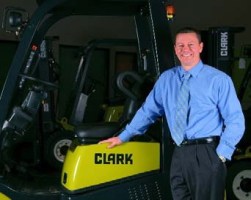
Scott JohnsonCLARK Material Handling Company (CLARK) is pleased to announce that Scott Johnson, Vice President of Sales and Marketing, has been elected the new Chairman of the Board of Directors for the Industrial Truck Association (ITA). Scott accepted the gavel from outgoing Chairman Brett Wood of Toyota at ITA’s 34th Annual Meeting held at Coeur d’Alene, Idaho, September 13-16, 2017.

“CLARK was instrumental in the formation of the Industrial Truck Association
over 65 years ago,” commented Scott upon accepting this prestigious position.
“For all these years, ITA has been the leading organization in the industrial truck
industry in North America, and has led the way for the formation of sister
organizations in other parts of the world. I am humbled and extremely proud to
support and now lead this organization which has served the forklift industry and
its members so well for so long.”

Scott previously served on ITA’s Statistics Committee and has represented
CLARK on ITA’s Executive Committee for several years. Scott has worked in the
material handling industry for over 20 years. He is also an active member of the
Material Handling Equipment Distributors Association (MHEDA). Scott is an avid
outdoorsman, and a proud alumnus of the University of Kentucky.

Taylor Machine Works Featured at White House

In July, President Trump hosted companies from across the country at the White House for the Made in America Product Showcase. The White House was highlighting and celebrating each state’s effort and commitment to American made products by bringing in and showing off products from all 50 states that are made and produced in the United States. Cal-Lift Inc. is proud to represent, Taylor Machine Works, the company chosen to represent Mississippi at the event. Below is a picture taken at the event featuring a Taylor as part of the celebration of American businesses.

Big Red at White House - sm

Companies participating in the event, by state, included:

State Company Product
Alabama Altec Bucket trucks
Alaska Alaska Bowl Company Bowls
Arizona PING Golf Golf clubs
Arkansas Hytrol Conveyer belt
California The California Wine Institute Wine
Colorado Gordon Signs Neon signs
Connecticut Sikorsky Helicopters
Delaware ILC Dover LP NASA space suit
Florida Tervis Tumblers
Georgia Chick Fil A Food
Hawaii Koloa Rum Co. Rum
Idaho Boise Cascade Company Engineered wood floors
Illinois Caterpillar Heavy equipment manufacturer
Indiana Broomcorn Johnnys Brooms
Iowa RMA Armament Body armor, dummies
Kansas Grasshopper Company Lawnmower
Kentucky Campbellsville Apparel Company Apparel
Louisiana Marucci Sports Baseball bats
Maine Hinckley Yachts Yacht
Maryland Eddie Heath’s Crab Pots Crab pot manufacturer
Massachusetts St. Pierre Manufacturing Corporation Horseshoes
Michigan Milton Manufacturing Fabric
Minnesota Faribault Woolen Mill Wool blankets
Mississippi Taylor Machine Works Forklift
Missouri Beehler Corporation Door hinges
Montana Simms Fishing Fishing gear
Nebraska Greater Omaha Packing Beef
Nevada Kimmie Candy Candy
New Hampshire Cider Belly Doughnuts Doughnut company
New Jersey Campbells Soup Soup
New Mexico Desert Plastics Plastic Manufacturer
New York Steinway Piano
North Carolina Cheerwine Soda
North Dakota Dakota Outerwear Co. Military outerwear manufacturer
Ohio Bully Tools Shovels, rakes, hoes etc.
Oklahoma DitchWitch Trencher/excavator
Oregon Leupold and Stevens Sights and scopes
Pennsylvania Ames Wheel barrows
Rhode Island Narragansett Brewing Company Beer
South Carolina Casual Cushion Company Cushions
South Dakota K Bar J Leather Shotgun chaps
Tennessee Gibson Guitars Guitars
Texas Stetson Hats Cowboy hats
Utah Colonial Flag Company Flags
Vermont Dubie Family Maple Maple syrup
Virginia National Capital Flag Company Flags
Washington Liberty Bottleworks Water bottles
West Virginia Homer Laughlin China Company Iconic fiesta line of china
Wisconsin Pierce Manufacturing Two firetrucks
Wyoming Aviat Aircraft Model aircraft

The Trump Administration is honoring the incredible workers and companies who make “Made in America” the world standard for quality and craftsmanship. America is a nation that honors the work of gifted and skilled tradespeople.

The President has also taken steps to ensure that Americans are equipped with the tools necessary to thrive in the modern economy by signing an Executive Order to promote and create more flexible apprenticeship programs that arm American workers with valuable skills.

We are proud to represent Taylor Machine Work’s products. Taylor has a history of the highest quality, heavy-duty forklifts on the market. Learn more about Taylor Machine Works.

OSHA Announces Top 10 Violations for 2016

Every October, the Department of Labor’s Occupational Safety and Health Administration releases a preliminary list of the 10 most frequently cited safety and health violations for the fiscal year, compiled from nearly 32,000 inspections of workplaces by federal OSHA staff.

One remarkable thing about the list is that it rarely changes. Year after year, OSHA inspectors see thousands of the same on-the-job hazards, any one of which could result in a fatality or severe injury.

More than 4,500 workers are killed on the job every year, and approximately 3 million are injured, despite the fact that by law, employers are responsible for providing safe and healthful workplaces for their workers. If all employers simply corrected the top 10 hazards, we are confident the number of deaths, amputations and hospitalizations would drastically decline.

Consider this list a starting point for workplace safety:

  1. Fall protection
  2. Hazard communication
  3. Scaffolds
  4. Respiratory protection
  5. Lockout/tagout
  6. Powered industrial trucks
  7. Ladders
  8. Machine guarding
  9. Electrical wiring
  10. Electrical, general requirements

It’s no coincidence that falls are among the leading causes of worker deaths, particularly in construction, and OSHA’s top 10 list features lack of fall protection as well as ladder and scaffold safety issues. We know how to protect workers from falls, and have an ongoing campaign to inform employers and workers about these measures.

OSHA says far too many workers are killed or gruesomely injured when machinery starts up suddenly while being repaired, or hands and fingers are exposed to moving parts. Lockout/tagout and machine guarding (including lift trucks) violations are often the culprit here. Proper lockout/tagout procedures ensure that machines are powered off and can’t be turned on while someone is working on them. And installing guards to keep hands, feet and other appendages away from moving machinery prevents amputations and worse.

The high number of fatalities associated with forklifts, and high number of violations for powered industrial truck safety, tell us that many workers are not being properly trained to safely drive these kinds of potentially hazardous equipment.

Rounding out the top 10 list are violations related to electrical safety, an area where the dangers are well-known.

Their list of top violations is far from comprehensive. OSHA regulations cover a wide range of hazards, all of which imperil worker health and safety. They urge employers to go beyond the minimal requirements to create a culture of safety at work, which has been shown to reduce costs, raise productivity and improve morale. To help them, OSHA has released new recommendations for creating a safety and health program at their workplaces.

OSHA has many additional resources, including a wealth of information on their website and their free and confidential On-site Consultation Program. But tackling the most common hazards is a good place to start saving workers’ lives and limbs.
Purchase Price vs. Total Ownership Cost

When you are purchasing a piece of equipment, you obtain competitive quotes, verify specifications and generate a purchase order. For that matter, just about anything we purchase goes through the same process. However, there is much more to purchasing forklifts and other material handling equipment. We have found, over the years, that often there are variables that can greatly affect the total cost of ownership of anything, be it an automobile, forklift or a giant cargo container.

The price you pay for your piece of equipment, by most accounts, reflects about 10% of the total ownership costs of that piece of equipment. This leaves 90% of your total costs up in the air. Depending on many variables, you could pay much more for the equipment than you needed to, or much less. These variables include:

Performance and Reliability of Equipment – Comparing cost per hour to operate can give you a good idea of what competing pieces of equipment will cost you over their useful life. When comparing cost per hour to operate, you should be sure you’re comparing similar models under similar circumstances. A lift truck operating 1500 hours a year for a light weight product manufacturer will cost far less over its lifetime than the same lift truck operating at a recycling facility.  This cost should reflect general maintenance requirements as well as fuel costs.

Fuel Consumption – While this is often a part of performance and cost per hour, knowing the fuel costs for each comparing brand and calculating total costs over the life of the equipment can sometimes be quite an eye-opener. In addition, what are your fuel alternatives? Can you use electric models? Thinking outside the box may result in lower costs to power your forklift and other lift equipment.

Specifications vs. Operations – It is rare that two 5,000-lb-capacity forklifts from competing brands will have similar specifications. Knowing what your facility will accommodate and comparing that with each model will give you insight into how each model will perform, given your operating parameters. Factors include: aisle width vs. turn radius, draw bar pull, suspension and ergonomics compared to your floor condition, indoor/outdoor use and ceiling height/rack height vs. max lift height. You will also want to compare features between brands to ensure that each lift truck model is equipped with the proper components to meet your operational requirements. For example: Can it operate properly inside your ice cream freezer?

Ergonomics – A comfortable and smooth-running piece of equipment will provide you with increased productivity. These are costs hidden in equipment that are quite real in daily operating conditions. How much time and research and development, does each brand put into the comfort and ease of use of their equipment? Happy, comfortable operators are simply more productive.

Safety – Never underestimate the safety features of your equipment. What equipment is being specified and what equipment is optional from each manufacturer is very important to know.  Reducing your accident costs or product/facility damage can make a big difference in your total fleet operational expenses.

Useful Life – Finally, how many hours can you expect from each piece of equipment until the cost to operate becomes cost-prohibitive? This can vary widely depending upon brand and model. But having some qualitative and quantitative information on hand, if possible, will help you make a better decision about the total cost of operating each unit/model.

There are many factors beyond price tag or lease rate that can help you make good decisions about the equipment you purchase. Having a partner that listens, evaluates and fulfills your needs is essential in building a fleet that is most productive and less costly in the long run. Contact us at 800-322-5438 to speak to one of our material handling professionals about the right material handling equipment for your operation.