Proper Inspection of Your Forklift’s Forks

Your forklift’s forks bear the brunt of your loading and unloading operations. Wear and tear, or damage to either component can create a dangerous situation for your employees and anyone working around your fleet. And a 10% wear on your forks can reduce your safe lifting capacity by 20%, making your 5,000lb. forklift, a 4,000lb. forklift.

Inspecting your forklift forks regularly is essential for safety and efficiency. Here’s a step-by-step guide to inspecting your forks properly:

  1. Visual Inspection
    ✔ Check for Cracks & Damage – Look closely for cracks, bends, or other signs of damage. Pay special attention to welds and stress points.
    ✔ Inspect for Bending or Warping – Lay a straight edge along the fork blade to check for any bending. Even slight bends can reduce lifting capacity.
    ✔ Look for Wear on the Heel – The fork heel (where the blade meets the shank) is a high-stress area. If it’s worn down by 10% or more, replace the fork.
    ✔ Check for Surface Damage – Rust, deep scratches, and chipped paint could indicate hidden damage or weak spots.
  2. Measure Fork Thickness
    Use calipers to measure the thickness of the fork heel.
    Compare it to the original thickness. If it has worn down by 10% or more, replace the fork (this reduces load capacity by about 20%).
  3. Check Fork Hooks & Mounting Points
    ✔ Ensure the hooks are not cracked or excessively worn.
    ✔ Verify that the locking pins are functional and secure.
    ✔ Make sure the forks are properly mounted and not loose.
  4. Confirm Even Fork Height
    Set the forks on a level surface and check if the tips are even.
    A difference of more than 3% of fork length means one fork is more worn than the other and should be replaced.
  5. Inspect Load Markings
    ✔ Make sure the load capacity markings on the forks are visible and legible.
    ✔ If they are missing or unreadable, you may need to replace the forks or have them re-marked.
  6. Test Fork Operation
    ✔ Engage and disengage the forks to ensure smooth movement.
    ✔ Look for signs of unusual resistance, sticking, or instability.
  7. Follow OSHA or Manufacturer Guidelines
    OSHA and forklift manufacturers typically recommend daily pre-shift inspections and full inspections at least once per year (or more in high-use environments).

If any defects or wear exceed safety limits, replace the forks immediately rather than attempting repairs. Forklifts depend on strong, reliable forks to operate safely. Contact us at 800-322-5438 and we will help you select the proper forks for your forklift and operational requirements.

Four Traits of Safety-Minded Companies

As managers and owners, we want a safe work environment for all of our employees. Unfortunately, all too often it escapes us. Time passes quickly, and initiatives that were once important standards become guidelines or even merely suggestions. How can we ensure that when we put safety measures in place, they will stay in place as employees come and go in a business climate that is constantly in flux?

While we lack the space to answer this question in full detail here, there are a few major approaches to providing a safe work environment that transcend industries, equipment and facilities. We outline these “hows and whys” of workplace safety below.

Since 1970, OSHA has worked to create a safer workplace for all employees, and their mission has been very successful. However, accidents still happen, and not only at companies willfully violating OSHA standards. Sometimes safety goes beyond meeting standards due to unique circumstances in certain operations.

The following are a few approaches to safety that have helped both large and small companies to achieve better workplace safety, fewer incidents and accidents, lower costs, more productivity and better workplace attitudes.

Safety is integrated with company mission

Safe companies put as much emphasis on doing things safely as on doing them productively. From day one, every employee knows they are working for a company that would rather they do their job safely than quickly. These employees will lockout a piece of equipment when something goes wrong, will replace light bulbs that need it instead of ignoring them and will report unsafe behavior or unsafe conditions.

Training never ends

Employees are involved in ongoing training – how to lift more safely, how to sit properly in a chair, how to operate a certain piece of equipment and so on. Your business is fluid: things change; equipment changes; and equipment, building space and employees are added. As your conditions change, your training must address these changes. Training for the safest work environments is never a one-time event or a two- or three-day training initiation. It is an ongoing pursuit of the safest possible work facility. It should be a goal of all employees to see that their coworkers go home safe every night.

Involvement at all levels

While involvement in a safe work environment must start from the corner office, the mission and strategy it is also important to ensure that every employee knows that they are involved and responsible. It is a good idea to create safety teams for every facet of your business, to revolve people in and out of those teams, and to have them conduct frequent facility or department reviews to identify potential threats. The most successful companies have reward systems for reporting anything that could be a potential threat, even if it is as minor as a sharp corner on a coat rack. This keeps all employees engaged in creating a safe work environment.

Accountability

Once you have established your safety mission and mapped out your strategy, everyone involved must be held accountable. No one can shirk their safety responsibilities. If a sharp corner on a coat rack is missed and someone gets cut, find out why no one noticed. Are they doing regular inspections? If safety standards are not being met, it is the leadership’s job to find out why and fix it. Everyone must know that if an accident happens on their watch, it must be accounted for and a plan must be designed to ensure that it will not happen again.

A truly safe, productive and profitable workplace is attained through ongoing efforts, and these are just a few of the major traits of successful organizations. We encourage you to seek the assistance of OSHA, NIOSH or other private safety consultants to help you organize and strategize your safety plans.

At Cal-Lift we believe it is one of our primary responsibilities to ensure that we all get home safe to our families each and every day.

Cal-Lift Celebrates Recognizes and Celebrates Forklift Safety Day

What You Can Do to Recognize Forklift Safety Day

Forklift Safety Day is a great opportunity to review your forklift safety program and/or plan. And if you don’t have a program or plan, this would be a great opportunity to create one! 

Start with Training

  • Are all of your forklift operators up-to-date on their training. Remember, forklift operators must receive refresher training every three years, and be evaluated on the equipment that they operate. 
  • How well do you know your operators? Download our Forklift Operator Questionnaire to get to know their experience operating lift equipment.

Inspections and Maintenance

  • We know that pre-shift inspections of all equipment are required by OSHA. But did you know that by taking a few minutes to inspect equipment not only improves safety, it helps you identify small issues before they blossom into giant repair or injury and damage headaches.
  • Planned Maintenance – This is a great opportunity to review your current PM program. Is it being executed properly according to intervals  you require? Is the Planned Maintenance complete and thorough? A thorough and robust Planned Maintenance program is key to maintaining safety and productivity of your forklifts. Learn more about our Service Department.

For more information on safety, planned maintenance, service or repair of your forklifts, please visit our website at www.cal-lift.com, or give us a call at 800-322-5438.

Review and Update Safety Policies

Review and update safety policies: Take the opportunity to review and update your organization’s forklift safety policies and procedures. Ensure they align with current best practices and regulations. If necessary, introduce new policies to further enhance safety measures.

Promote a Culture of Safety

Encourage a culture of safety within your organization. Encourage employees to report any safety concerns or near-miss incidents. Recognize and reward individuals or teams that consistently prioritize forklift safety.

Forklift Safety is No Accident

We’re here to help you maintain safety in your forklift operations by ensuring all your employees that might operate a forklift, know the limitations and dangers of forklifts AND to ensure they are all operating a peak efficiency and safety. To speak to one of our professional abo

Forklift Safety Inspections

Forklift Safety Day is fast approaching and we want to help raise awareness to help improve safety on, and around the forklifts we operate. Pre-shift inspections have been the law for two decades and besides maintaining compliance, the make great sense in terms of employee safety, productivity and the overall health of your business. Forklift inspections are important for:

  1. Safety: Forklifts are powerful and heavy machinery used to move and lift heavy loads. Regular inspections ensure that forklifts are in safe working condition, minimizing the risk of accidents or injuries to operators and bystanders. Inspections help identify potential hazards, such as faulty brakes, worn-out tires, malfunctioning controls, or hydraulic leaks, which can be addressed before they lead to accidents.
  2. Compliance: Forklift inspections are often required by law and regulatory bodies to ensure compliance with safety standards. In many countries, employers are legally obligated to maintain a safe working environment and regularly inspect their equipment, including forklifts. Adhering to these regulations helps avoid penalties, fines, or legal issues.
  3. Preventive Maintenance: Regular inspections allow for early detection of mechanical issues or wear and tear on various components. Identifying problems in advance enables proactive maintenance and repairs, preventing breakdowns or major failures that could lead to costly repairs, downtime, and interruptions in operations. By addressing minor issues promptly, more significant and costly problems can be avoided.
  4. Equipment Longevity: Forklifts are a significant investment for businesses, and proper maintenance can extend their lifespan. Regular inspections help identify areas that require attention, such as lubrication, filter replacement, or component adjustments. By keeping the forklift in good working condition, its overall longevity is increased, reducing the need for premature replacements and saving costs in the long run.
  5. Operator Confidence: Consistently inspecting and maintaining forklifts boosts operator confidence. When operators know that the equipment they are using is well-maintained and safe, they can perform their tasks more efficiently and with peace of mind. This can lead to improved productivity, reduced operator errors, and increased overall operational effectiveness.

Overall, forklift inspections are vital for ensuring the safety of operators and those around them, maintaining compliance with regulations, preventing accidents and breakdowns, extending equipment life, and optimizing productivity in the workplace. Below is a video that helps walk you through an inspection of your lift trucks.

Our forklift inspection checklists for electric and IC forklifts are also an important tool to help you conduct thorough inspections of your lift trucks. These were developed with inspection suggestions directly from OSHA. Remember to also inspect any additional equipment you’ve added to the forklift, safety lights and other products, attachments etc…

Download our Electric Forklift Inspection Form

Download our IC Forklift Inspection Form

We believe forklift safety starts with operating a safe forklift. For any questions about service or parts as a result of your inspections, please contact us at 800-322-5438.

CLARK SEC20 – SEC35 Electric Cushion Tire Forklift

CLARK’s SEC20-35, a 4,000-7,000 pound four-wheel electric forklift is the latest addition to the S-SERIES family, the SEC20-35 combines all of the SMART, STRONG and SAFE features you’ve come to expect from the S-SERIES family with none of the emissions of a standard IC truck. Featuring an ergonomic operator compartment, strong components, and a true 7,000-pound capacity—a first for CLARK four-wheel electric forklifts—the SEC20-35 is the perfect choice for a wide variety of indoor applications, including warehouses, manufacturing facilities, food and beverage operations, and more! Download the brochure for all the details.

SMART

The high-resolution interactive LCD dash display on the SEC20-3 allows operators to stay constantly informed about the truck’s performance. New ZAPI ACE3 controllers allow for advanced control and communication. Three selectable performance modes, along with a turtle mode feature, allows for greater flexibility and customization per application.

STRONG

With the SEC20-35, durability and reliability are never in question. With a capacity range up to 7,000 pounds—a CLARK first for electric four-wheel trucks—and key components designed to withstand full capacity, the SEC20-35 can tackle any challenge in its path. The rear-hinging hood provides durability and allows for easy service, and the thick, durable front fenders provide strength to the frame of the truck. The steel sump tank dissipates heat faster, prolonging hydraulic oil life, ensuring your SEC20-35 is Built to Last for years to come.

SAFE

Safety is a cornerstone of all CLARK products, and the SEC20-35 is no exception. The integrated Dampening Block Stability increases stability and durability in the lift truck. The standard Performance Enhancement Package utilizes a cutback switch on the mast, reducing tilt and travel speeds when the forks are fully loaded and lowered, improving operator and pedestrian safety. Additional optional safety equipment includes load weight indicator, seatbelt interlock, and more!

ADVANCED ERGONOMICS

The ergonomically designed operator compartment promotes greater operator comfort and efficiency, with a spacious floorboard, small steering wheel diameter, hood-mounted levers, cowl-mounted SMART dash, and comfortable full-suspension vinyl seat. The accelerator and brake pedals are also optimally positioned for smooth transitions, reducing operator fatigue.

SOLID AND VERSATILE

The welded heavy gauge frame provides lasting strength and consistency in the operation of the truck. A CLARK standard, the nested I-beam mast on the SEC20-35 was designed for longevity and stability, allowing for a true 7,000-pound capacity on the SEC35. Finally, all major components for the series were designed to withstand the full 7,000-pound capacity, ensuring that no matter which capacity you need, the components can tackle any job with ease.

For more information, a demo or quote on CLARK’s new SEC20 – SEC35 please contact us at 800-322-5438. Visit our CLARK showroom to see all the CLARK products available at our Southern California branch.

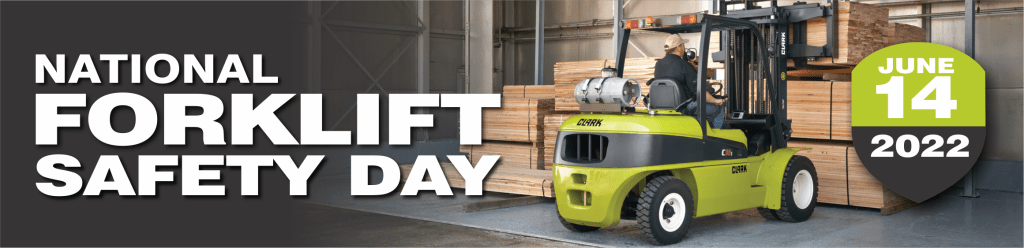
Cal-Lift Celebrates Forklift Safety Day 2022

Forklift Safety Day 2022 List of Events

With the past two year’s events being held virtually, it’s exciting to be able to hold Forklift Safety Day 2022 in person, in Washington DC. And while most of us will be unable to attend, below is a list of activities planned to recognize and bring attention to the potential dangers of forklift operation.

Monday, June 13, 2022 (Willard InterContinental Hotel)

  • 3:00 PM – 5:00 PM – Educational Session (open to all ITA Members & Invited Guests) Buchanan Room
    • OSHA Updates
    • Current Congressional Activity Updates
    • Trade/other
      6:00 PM – 7:00 PM – NFSD Reception (Open to all ITA Members & Guests) The Nest Room

Tuesday, June 14,2022

  • 7:30 AM – 8:30 AM – Breakfast (Peacock Lounge at Willard InterContinental Hotel)
  • 9:00 AM – 11:00 AM – NFSD Event/Presentations (National Press Club, Main Ballroom)
  • 11:30 AM – 4:00 PM – Congressional Meetings (Capitol Hil)

CLICK HERE for more information on the event and register at the Industrial Truck Association’s website.

This year’s NFSD Chair is Jonathan Dawley, President & CEO of KION North America.

DC Velocity is the media partner for National Forklift Safety Day 2022. 

What You Can Do to Recognize Forklift Safety Day

Forklift Safety Day is a great opportunity to review your forklift safety program and/or plan. And if you don’t have a program or plan, this would be a great opportunity to create one! 

Start with Training

  • Are all of your forklift operators up-to-date on their training. Remember, forklift operators must receive refresher training every three years, and be evaluated on the equipment that they operate. 
  • How well do you know your operators? Download our Forklift Operator Questionnaire to get to know their experience operating lift equipment.

Inspections and Maintenance

  • We know that pre-shift inspections of all equipment are required by OSHA. But did you know that by taking a few minutes to inspect equipment not only improves safety, it helps you identify small issues before they blossom into giant repair or injury and damage headaches. 
  • Planned Maintenance – This is a great opportunity to review your current PM program. Is it being executed properly according to intervals  you require? Is the Planned Maintenance complete and thorough? A thorough and robust Planned Maintenance program is key to maintaining safety and productivity of your forklifts. Learn more about our Service Department.

For more information on safety, planned maintenance, service or repair of your forklifts, please visit our website at www.cal-lift.com, or give us a call at 800-322-5438.

Forklift Safety is No Accident

We’re here to help you maintain safety in your forklift operations by ensuring all your employees that might operate a forklift, know the limitations and dangers of forklifts AND to ensure they are all operating a peak efficiency and safety. To speak to one of our professional about any aspects of your forklift fleet’s safety or performance, just give us a call at 800-828-2804.

The Four Levels of Learning

When you were learning to tie your shoes, it wasn’t a one-time demonstration by your mother. Rather it was a tedious task for both of you. Teaching and learning can be quite difficult and frustrating for the trainer and the trainee. Understanding how people learn and what it takes to become proficient at any task underscores the importance of a continual training program for your forklift operators, or for anyone that’s learning anything in your organization to help keep it running.

Unlike learning to tie your shoes, your company is a dynamic, flowing organization. Things are rarely the same next year as they are today. New equipment, new employees, new products, new fixtures, the variable set goes on and never ceases to change. Adapting to these changes means understanding how we learn and the stages of learning we all pass through before become proficient at anything. Being able to identify where each employee is in the process helps you minimize the training costs and maximize productivity. Let’s start at the first level of learning.

The Unconscious Incompetent – Before you wore shoes, you had no idea that you didn’t know how to tie them. This is the most ignorant stage of learning, but is the first. There are many things your employees don’t know, that they don’t know, but you do know. It’s important to understand this. We often assume “they know how a Clark forklift operates.” But do they? Personal interviews or questionnaires are frequently used to determine what someone knows, and doesn’t know, which leads us to the next level.

The Conscious Incompetent – “Oh, these are shoes and I see I have no idea how to secure them to my feet.” Or, you know know that you don’t know something. For example, do you employees know how dangerous a forklift can be? At level one, they likely do not. But being introduced to the dangers, or “learning” the dangers, makes them safer. At level one, you may hop right on the lift truck and drive away, not knowing how deadly of a situation you just created. However, now you are armed with knowledge and understand there is much more to learn.

The Conscious Competent – At this level, a person has learned a task or process, but is conscious of the process and has to give it thought while they are completing the task. “I’m coming up at an aisle intersection, what am I supposed to do? “….”oh, yes, hit the horn and slow down” they might be thinking. The key is, they’re thinking. Some like this level, but having to think takes time, and a fraction of a second can have dire consequences in a material handling situation. The ultimate goal through continual training and practice is to achieve the level of activity where you perform a task and give it no thought, or “The Unconscious Competent.”

The Unconscious Competent – It is at this level is where you desire to take your employees regardless of what task you’re asking them to perform. Whether it’s a process for loading or unloading a tractor trailer or how to change a forklift battery. When a person performs a task precisely without giving it thought, he or she is now at his/her most productive level and will maximize the safety of your facility. Like tying your shoes, which you don’t think about any longer, what once was a frustrating process now becomes second nature. It is at this level you are most proficient.

Getting your employees to the “Unconscious Competent” stage takes much more than a one-time classroom and hands on training situation. It’s takes a process for continually exposing your employees to information, having them practice, slowly at first. Building confidence with a supportive environment where they are not “hurried to perform” allows them to grow and learn at their own pace. Some will get there quicker than others, but the ultimate goal is to have them all performing without a lot of thought about what they are doing. This allows them to give time to think about how they can make what they’re doing….even more productive, or safer.

Forklift Safety Day 2021, What You Can Do to Celebrate

The Industrial Truck Association has announced Forklift Safety Day, to be held Tuesday, June 8. While most of us won’t be able to attend the DC festivities as they are virtual due to Covid 19, there are things you can do to take advantage of this day to help create awareness about the dangers that forklifts present and how to minimize the potential for accidents that can result in injury or death, damage to your facility, equipment and financial losses.

We’ve compiled a short list of things you can do to improve safety on and around your forklifts, and create more attention to forklift safety.

Forklift Operator Training

Make sure all your forklift operators have been trained and that their refresher training is up to date, if applicable or necessary.

Free Forklift Safety Downloads

Pedestrian Training

Take some time to gather any staff that operates around forklifts, but not on them, to refresh them about the dangers of this equipment and how to be sure to use safe procedures when they are in an area of your facility where forklifts are being operated.

Forklift Maintenance

Make sure all your forklift’s maintenance is up to date. If you have a Planned Maintenance Agreement, this would be a good time to review it with your service provider to ensure all standard checkpoints as well as unique equipment attachments are being inspected and maintained properly.

Make sure you forklifts have proper safety equipment and that it’s operating properly. Lights, horns, back-up alarms, seat belts, fire extinguishers etc… 

Make sure you have lock-out kits to ensure that forklifts that do not pass an inspection are locked out immediately until repairs are made.

Learn more about our maintenance and service offerings

Site-Specific Review

Review any unique “site specific” features your facility may have and be sure your operators are aware of proper handling of equipment while on or around these features (ramps, areas where floors can be slick, floor substrates that vary etc…)

Forklift Operator Training

Make sure that training is part of your company’s orientation for anyone that will or MIGHT operate a forklift. Remember, employees that have not been properly trained aren’t even allowed to sit on and start a forklift, much less move it out of the way of anything.

Forklift Fleet Analysis

Review all your forklifts for possible replacement. Old forklifts, or those that are getting “up there” in hours, might be potential threats. Review safety records and maintenance logs for your equipment. You might find this could be a good time to replace some or even all of your forklifts.-

Our goal is to help you operate safe, efficient and productive forklift equipment. To discuss forklift safety, operator training – or to get a quote on new equipment, please contact us at 800-322-5438.

Who Created OSHA, Why, and the Outcomes

OSHA-Logo-300x298Recently, we shared some information about the effects forty years of OSHA has had on industries. This led to a conversation about the real intents, effects and outcomes of OSHA on the American worker. We thought we would share some of the content of those discussions with you in order to bring a renewed perspective about the agency and what they do every day to ensure people like you, me and our children can go to work and be relatively confident that they will be protected from hazards seen, and sometimes unseen, in their workplace.

To understand any company’s operating philosophy, you must understand their mission. Congress created OSHA to assure safe and healthful conditions for working men and women by setting and enforcing standards and providing training, outreach, education, and compliance assistance.

We won’t belabor a long study of history. But OSHA formed for a reason. While many companies, past and present, do their best to ensure the safety of their employees, there also were, and still are, many that do not place worker safety in high regard. Given that one of the roles of government is to “promote the general welfare” of its citizens, something needed to be done to ensure that all companies were doing the “right thing” when it came to the safety and welfare of their workforce. With that purpose in mind, OSHA was formed and signed into law by President Richard Nixon under the Occupational Health and Safety Act of 1971.

When OSHA establishes a new regulation, it seeks and receives a tremendous amount of input from the public via RFIs (Requests for Information) and announcements that a new regulation is pending. They consult both large and small businesses to ensure the regulation will not put undue burdens on small businesses and cause them to suffer financially or potentially close. The bottom line is that OSHA has a systematic process to try to balance the need for safety and health with the productivity of business.

Within our industry, OSHA provides educational tools like the Powered Industrial Truck eTool to help businesses understand the dangers of lift trucks and how to ensure that each father, mother, sister and brother who operates one gets home safely each night. This site is packed full of information for the sole purpose of seeing that each person who operates a lift truck knows the dangers of the equipment and has guidance on how to operate it safely within the parameters of their work environment.

The outcome cannot be debated. Since its inception, workplace fatalities and occupational injuries have dropped by 60%. In fact, in 1971, when OSHA was signed into law, workplace fatalities numbered about 14,000 per year. In 2009, even though the American workforce has doubled in size, the number of American deaths due to workplace injury had dropped to 4,400. OSHA has helped businesses accomplish this by creating best practices for any given job, sharing them with other companies through its education process, and enforcing them through inspections.

We perform a tremendous amount of forklift operator training to meet OSHA requirements. When we engage a customer in training, we encourage them not to approach it as simply another hoop government forces us to jump through. While yes, we do recognize that it does place a burden on a business, and there’s no doubt that there have been times when OSHA has not gotten it completely right, we believe OSHA brings value to every American in the workplace.

We have found that companies that provide comprehensive training programs have higher levels of employee satisfaction, leading to better productivity, better care for the equipment they operate, fewer accidents and injuries, and a healthier bottom line for the company. Now that’s a by-product of OSHA we can all live with! Visit our website to learn more about Cal-Lift, Inc., Southern California’s source for material handling equipment, service, parts and rentals.

www.cal-lift.com

Four Traits of Safety Minded Companies

When companies are safety-minded these are four things that almost all of them do proactively to ensure a safe operation.
As managers and owners, we want a safe work environment for all of our employees. Unfortunately, all too often it escapes us. Time passes quickly, and initiatives that were once important standards become guidelines or even merely suggestions. How can we ensure that when we put safety measures in place, they will stay in place as employees come and go in a business climate that is constantly in flux?While we lack the space to answer this question in full detail here, there are a few major approaches to providing a safe work environment that transcend industries, equipment and facilities. We outline these “hows and whys” of workplace safety below.

Since 1970, OSHA has worked to create a safer workplace for all employees, and their mission has been very successful. However, accidents still happen, and not only at companies willfully violating OSHA standards. Sometimes safety goes beyond meeting standards due to unique circumstances in certain operations.

The following are a few approaches to safety that have helped both large and small companies to achieve better workplace safety, fewer incidents and accidents, lower costs, more productivity and better workplace attitudes.

Safety is integrated with company mission – Safe companies put as much emphasis on doing things safely as on doing them productively. From day one, every employee knows they are working for a company that would rather they do their job safely than quickly. These employees will lockout a piece of equipment when something goes wrong, will replace light bulbs that need it instead of ignoring them and will report unsafe behavior or unsafe conditions.

Training never ends – Employees are involved in ongoing training – how to lift more safely, how to sit properly in a chair, how to operate a certain piece of equipment and so on. Your business is fluid: things change; equipment changes; and equipment, building space and employees are added. As your conditions change, your training must address these changes. Training for the safest work environments is never a one-time event or a two- or three-day training initiation. It is an ongoing pursuit of the safest possible work facility. It should be a goal of all employees to see that their coworkers go home safe every night.

Involvement at all levels
 – While involvement in a safe work environment must start from the corner office, the mission and strategy it is also important to ensure that every employee knows that they are involved and responsible. It is a good idea to create safety teams for every facet of your business, to revolve people in and out of those teams, and to have them conduct frequent facility or department reviews to identify potential threats. The most successful companies have reward systems for reporting anything that could be a potential threat, even if it is as minor as a sharp corner on a coat rack. This keeps all employees engaged in creating a safe work environment.

Accountability – Once you have established your safety mission and mapped out your strategy, everyone involved must be held accountable. No one can shirk their safety responsibilities. If a sharp corner on a coat rack is missed and someone gets cut, find out why no one noticed. Are they doing regular inspections? If safety standards are not being met, it is the leadership’s job to find out why and fix it. Everyone must know that if an accident happens on their watch, it must be accounted for and a plan must be designed to ensure that it will not happen again.

A truly safe, productive and profitable workplace is attained through ongoing efforts, and these are just a few of the major traits of successful organizations. We encourage you to seek the assistance of OSHA, NIOSH or other private safety consultants to help you organize and strategize your safety plans.

If there is anything we can help you with in regard to your equipment and its operators, please contact us at 800-322-5438. We would be happy to assist you!