Forklift Cooling System Tips

Forklift engine cooling system tips

Getting hot under the collar is about as good for your forklifts as it is for you.  Heat results in increased engine wear, part failure and lift truck maintenance expenses. Like most other facets of your operation, an ounce of prevention is worth a pound of cure, and keeping your engine operating at recommended manufacturer temperatures will improve your productivity and bottom line.

If your lift trucks are inspected as part of a regular planned maintenance program with inspections being performed by trained lift truck professionals, it is likely that these elements of your cooling system are being inspected and abnormal wear is being brought to your attention. However, one oversight and the end result could be a repair bill mounting into the thousands.

Keeping your cool includes:

Replacing Forklift Engine Coolant with Coolant, Not Water 

Water in your coolant system can be a very short-term patch, but can result in long-term damage to your engine and early failure. Water has a lower boiling temperature than coolant and will cause your engine to run at a higher temperature, resulting in oil viscosity breakdown and undue engine wear.

Replacing Forklift Engine Hoses Before You See Damage

Hoses wear over time, often from the inside out. Inspect for leaks on a regular basis and replace hoses at manufacturers recommended intervals. Leaks can result in loss of coolant over time, increase engine temperature and lower performance. Hose failure and the resulting spill can produce a hazardous situation for everyone in the vicinity.

Keeping the Pressure on

The coolant system is pressurized to raise the boiling point of the coolant. Radiator caps maintain the pressure in the system. When the cap is not functioning properly, coolant can boil out onto the floor at near normal operating temperatures, causing operators or technicians to incorrectly believe that the engine is overheating.  Pressure testing the radiator cap is the only sure way to maintain proper coolant system pressure.

Keeping Your Forklift’s Engine Properly Belted

An engine’s fan belt creates air flow over the engine, removing external surface heat.  It also drives the circulation of the engine’s coolant through the engine, keeping the internal temperature at normal operating limits. Worn belts can reduce the flow of coolant, increasing the temperature and creating a long-term problem for your engine. Belt failure can result in immediate overheating, engine damage and an expensive repair. Have your belts inspected for wear and replace them at factory suggested intervals to ensure proper coolant flow inside and out.

Inspecting Your Engine’s Greatest Fan

Driven by the fan belt to perform, a properly operating engine fan allows for the normal conduction of heat from the inside of the engine to the surface where the fan whisks away the excess heat. A cracked or damaged fan can reduce the effectiveness of the fan and increase engine temperature. Be sure to inspect the fan for wear and damage and replace it with a manufacturer’s suggested replacement. Heavy steel fans can produce undue wear on the engine and reduce the fan’s capacity to remove heat, or even create its own heat by increased demand for energy by a heavier fan.

Regular Coolant Fluid Replacement

Like oil, cooling system fluid has a recommended maximum useful life, and that can vary widely depending upon how your system was serviced and the type of coolant used to replace your current fluid.  Every engine and application is different so don’t solely rely on factory recommended intervals for a flush and refill. Consult with us about an application survey and we can assist you in setting a schedule for regular coolant replacement that makes sense for YOUR operation.

Having your forklift’s cooling system regularly serviced ensures maximum engine performance and useful life. It reduces your maintenance expenses and improves your productivity. Forklifts on the floor, operating are far more essential to your bottom line than they are when they’re sitting in our shop.

If your lift trucks are not on a regularly scheduled Planned Maintenance program, they should be. Let us take the worry out of what and when to inspect, letting you tend to the business of what you do best.

Visit our forklift services page to learn more about how we can help you maximize productivity and minimize costs of your material handling operation. Or contact us at 800-322-5438 to learn more about our Planned Maintenance programs that keep your forklifts, terminal tractors and container handlers cool, under the pressure of Summer.
Forklift Safety Day, Southern California, What You Can Do

The Industrial Truck Association has announced it’s second annual Forklift Safety Day, to be held Tuesday, June 11. While most of us won’t be able to attend the DC festivities, there are things you can do to take advantage of this day to help create awareness about the dangers that forklifts present and how to minimize the potential for accidents that can result in injury or death, damage to your facility, equipment and financial losses.

We’ve compiled a short list of things you can do on June 11th to improve safety on and around your forklifts.

  1. Make sure all your forklift operators have been trained and that their refresher training is up to date, if applicable or necessary.
  2. Download our Forklift Operator Questionnaire to help you vet new operators about their actual experience and history with forklifts.
  3. Take time to teach your forklift operators the importance of daily inspections of their forklifts. Daily inspections reduce the risk of equipment failure and catch small problems before they blossom into giant ones. Download our IC Forklift Inspection Form and Electric Forklift Inspection Forms.
  4. Take some time to gather any staff that operates around forklifts, but not on them, to refresh them about the dangers of this equipment and how to be sure to use safe procedures when they are in an area of your facility where forklifts are being operated.
  5. Make sure all your forklift’s maintenance is up to date. If you have a Planned Maintenance Agreement, this would be a good time to review it with your service provider to ensure all standard checkpoints as well as unique equipment attachments are being inspected and maintained properly.
  6. Review any unique “site specific” features your facility may have and be sure your operators are aware of proper handling of equipment while on or around these features (ramps, areas where floors can be slick, floor substrates that vary etc…)
  7. Make sure that training is part of your company’s orientation for anyone that will or MIGHT operate a forklift. Remember, employees that have not been properly trained aren’t even allowed to sit on and start a forklift, much less move it out of the way of anything.
  8. Make sure you have lock-out kits to ensure that forklifts that do not pass an inspection are locked out immediately until repairs are made.
  9. Review all your forklifts for possible replacement. Old forklifts, or those that are getting “up there” in hours, might be potential threats. Review safety records and maintenance logs for your equipment. You might find this could be a good time to replace some or even all of your forklifts.-

Our goal is to help you operate safe, efficient and productive forklift equipment in and around the Southern California area. To discuss forklift safety, planned maintenance – or to get a quote on new equipment, please contact us at 800-322-5438.

revised-forklift-safety-day-2019

What’s Reducing the Safe Lifting Capacity of Your Forklifts?

You just purchased a new forklift. Along with your purchase you made sure your forklift operators were trained properly.  Operators’ knowledge of safe lifting capacity equals a lower risk of property damage, injury or death.

Your forklift was shipped from the manufacturer with a data plate indicating lift capacities at various heights based on its equipment options, for example, side shifters, carton clamps or other attachments. Once you put the forklift into service, there are several factors that can, over time, dramatically reduce the safe lifting capacity of that forklift. Below we have highlighted the major factors effecting lift capacity.

Forks – The continual use of forklifts results in normal fork wear. The amount and rate at which they wear depends upon the weight of the loads handled, how they are handled (what type of substrate is coming in contact with the fork) and how often loads are handled (duty cycles). A 10% reduction in fork surface (wear) results in a 20% reduction in the safe lifting capacity of your forklift. A forklift rated to lift 5,000lbs is reduced to 4,000lb once the forks are 10% worn. At this point the forks must be replaced.

Daily Inspections are required by OSHA – While a daily measurement of fork wear is not required, it is good practice to conduct a fork wear inspection on a regular basis, based on previous “FORK” criteria previously mentioned. During daily inspections, forks should be visually inspected for cracks or bends. Both reduce the safe lifting capacity of your forklift and create a dangerous operating condition.

If the load you are carrying changes requiring a need to use longer forks, the load center changes. This results in a reduction of safe lifting capacity. It will be important that you work with the manufacturer to determine the new safe lifting capacity of your forklift with the new fork configuration.

Chains – Chains should be inspected as part of any normal Planned Maintenance Program. Your service technicians should be properly trained to measure chains to determine when they need to be replaced. When a 3% elongation results in a 15% reduction in safe lifting capacity the chains should be replaced. Never attempt repairs on chains that are worn. Replacing them with the proper chains per manufacturer’s specifications is recommended to ensure a safe working environment for your employees.

Load Center – The data plate on your forklift indicates safe load capacities at given fork load centers. Not every pallet received by your facility is loaded according to the forklift manufactures specifications. It is important for safe operation to recognize and adjust your lifting practices to ensure safe handling of materials. As a rule, for every inch beyond the manufacturers recommended fork load center, one hundred pounds of lifting capacity is lost at a lowered height of six to eight inches.

Upon replacing the following, verify:

  • Tires – Verify they meet manufacturer’s specifications. Especially if changing the type (cushion or pneumatic) or the size.
  • Batteries – Verify they meet manufacturer’s specifications. If you have purchased a used forklift this can be an issue. Seek assistance from a professional that you are equipping it with the proper battery.
  • Attachments – Anytime you add an attachment of any kind, regardless of how benign it may seem, work with a professional or the manufacturer to determine if the attachment affects safe lifting capacity – if so, how much.
  • Engines – You might never replace an engine. But if you do, be certain the replacement engine meets or exceeds the weight of the current engine and that the configuration of the replacement engine does not affect the center of gravity of the forklift. This is particularly important if you purchase used forklifts. Ask the seller if the engine has been replaced or altered in any dramatic fashion. If it has, be sure the forklift has been re-rated for safe lifting capacity.

There are sites on the Internet like www.lifttruckcapacitycalculator.com that can assist you in re-rating your forklifts after minor changes such as attachments or other alterations that may affect their safe lifting capacity.

Working with a partner like Cal-Lift to institute and manage a Planned Maintenance Program is the best way to guarantee that your forklift fleet is always operating safely and your employees are not in danger. Planned Maintenance Programs have also been proven to be the best way to maximize the productivity of your forklift fleet by reducing down-time. These programs will pay for themselves over and over again throughout the life of your forklifts.

Cal-Lift Sponsors DMA Fund Raiser


Cal-Lift is once again proud to be a major sponsor of the Distribution Management Association’s 2018 Golf Outing / Fund Raiser. The DMA’s Mission is “To facilitate involvement, partnerships, professional development and connections for its members and the community.” DMA focuses assisting in logistics management in Southern California by providing support services to help its members recruit and train employees to maximize operational excellence. Below is a video of last year’s event:

Cal-Lift is proud to be a support of the DMA in Southern California. To learn more about the DMA, please visit their website.


CLARK’s New WPL25 Electric Walkie Pallet Jack Video

CLARK’s new Lithium Ion battery powered pallet jack, weighs in at less than 300lbs, but can carry quite a load and improve productivity in your materials handling operation. See the features and advantages of this little workhorse, then contact us for a quote or call us at 800-322-LIFT.

OSHA’s Free Safety Consultation Program

Safety is one of the primary pillars of a productive and profitable material handling operation. Unfortunately, most small to mid-size companies to not have the resources for a safety and compliance manager, much less a safety department. OSHA has tools available to these companies, like yours, to help you not only gain compliance, but how to look at your operation with a “safety eye” and help you identify potential hazards before they become health, safety or legal issues.

OSHA’s Compliance Assistance QuickStart will help you identify the guidelines that apply to your operation, teach you how to survey your operation for potential hazards and violations, and assist you in developing a safety program to ensure compliance and a healthy, safe operation based on your individual needs.

Once you have established needs, OSHA’s tools help you learn how to train your employees to perform their functions safely and be on the lookout for potential safety hazards that might pop up unannounced. Finally, they help you keep records and learn how to report hazards and incidents when they occur to ensure you are maintaining compliance.

Need assistance in getting started? OSHA has you covered. The OSHA Free Consultation program provides you with access to an OSHA consultant who will schedule an appointment with you for a walk-through of your facility. During this consultation, you will receive a pre-inspection conference, a walk-through and a post-inspection conference. Following, the OSHA consultant will provide you with a written report of findings and agreed upon time frame for agreed upon abatement periods. Findings of this consultation will only be reported to OSHA if you fail to correct any serious hazards or situations that present an imminent danger.

The goal is to treat every potential hazard as if someone you love, were doing the job. Getting each of your employees and visitors home safely at night is the key to having them return tomorrow, ready to work, and work productively!

OSHA Consultations Fact Sheet for more information. Or to get started, visit the OSHA Consultation Directory to find consultants nearest you.

Cal-Lift is Southern California’s source for the industry’s top material handling equipment, including BYD lithium iron battery powered forklifts. To learn more about Cal-Lift Los Angeles, please visit our website.

CLARK’s All-New S-Series Forklifts

S Series Web Header

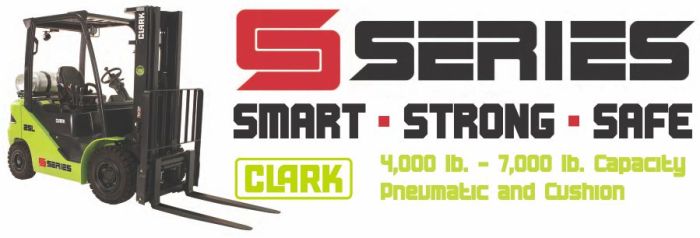
Building on over 100 years of lift truck innovations, design and industry firsts. The evolution continues…. The CLARK S-Series, the next generation of lift trucks.
SMART
CLARK’s design standards have historically led the industry in innovation and firsts; the S-Series represents the next phase of lift truck design.

  • Interactive Dash
  • Built-in Reporting and Operator Performance via Optional Telemetry
  • Engine/Powertrain Protection
  • Integrated Systematic Service Tools
  • On-Board Reporting of Operator Controlled Functions
STRONG
CLARK Trucks are “Built to Last”; from their industry designs to legacy dealers, their combined strengths ensure a strong performance to your bottom line with lower cost of ownership.

  • Force-Cooled Wet Disc Brakes
  • Fully Welded Heavy Gauge Frame
  • Nested I-Beam Upright
  • 6-Roller Carriage
  • External Side-Thrust Rollers
  • Proven Steer Axles and Cooling Systems
SAFE
CLARK makes your safety their priority. Safety has been a cornerstone of CLARK design standards for over 100 years. Their standards became the industry standards. The S-Series innovates again with standard features, including:

  • Automatically Applied Parking Brake
  • Speed Limit Control
  • Increased Visibility
  • Optional Rear View Camera
  • High-Visibility Orange Seat Belt
  • Designed with Optimal Center of Gravity to Enhance Truck Stability.
S-Series-Pneumatic-Brochure

S-Series-Cushion-Brochure

S-Series-Standard-Specs

For a quote or more information, please Contact Us, or call us at 800-322-LIFT

Section 179 Improved for 2018

Section 179 Header

With the passage and signing into law of H.R.1, aka, The Tax Cuts and Jobs Act, the deduction limit for Section 179 increases to $1,000,000 for 2018 and beyond. The limit on equipment purchases likewise has increased to $2.5 million.

Further, the bonus depreciation is 100% and is made retroactive to 9/27/2017 and good through 2022. The bonus depreciation also now includes used equipment.

See the fully updated 2018 Section 179 Calculator to see how this tax deduction affects your company.

2017 Section 179 Tax Information (Last Year)

The Section 179 deduction is $500,000 for 2017, with a 50% bonus depreciation in place until late September (see 2018 information for change).

Click Here for the fully updated Section 179 Calculator for tax year 2017 (Last Year).

Answers to the Three Most Common Section 179 Questions

How Much Can I Save on My Taxes in 2018?
It depends on the amount of qualifying equipment and software that you purchase and put into use. See the handy Section 179 Calculator that’s fully updated for 2018, and includes any/all increases from any future legislation.

What Sort of Equipment Qualifies in 2018?
Most tangible business equipment qualifies. Click here for qualifying property.

When Do I Have to Do This By?
Section 179 for 2018 expires midnight, 12/31/2018. If you wish to deduct the full price of your equipment from your 2018 taxes and take advantage of the new higher deduction limits, it must be purchased and put into service by then.

Many businesses are finding Section 179 Qualified Financing to be an attractive option in 2018, especially since the expected Federal Discount Rate increases don’t leave much time for action. Please apply today.

More Section 179 Deduction Questions Answered

Welcome to Section179.Org, your definitive resource for all things Section 179. We’ve brought together a large amount of information regarding Section 179, and clearly and honestly discuss the various aspects of IRS §179 in plain language. This will allow you to make the best possible financial decisions for your company.

Section 179 can be extremely profitable to you, so it is to your benefit to learn as much as possible. To begin, you may have a lot of questions regarding Section 179 such as:

Check out our line-up of new forklifts or used forklifts, then contact us at 800-322-5438 for more information or a quote.

Scott Johnson Elected Chair of ITA

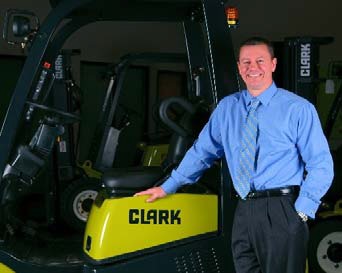
Scott JohnsonCLARK Material Handling Company (CLARK) is pleased to announce that Scott Johnson, Vice President of Sales and Marketing, has been elected the new Chairman of the Board of Directors for the Industrial Truck Association (ITA). Scott accepted the gavel from outgoing Chairman Brett Wood of Toyota at ITA’s 34th Annual Meeting held at Coeur d’Alene, Idaho, September 13-16, 2017.

“CLARK was instrumental in the formation of the Industrial Truck Association
over 65 years ago,” commented Scott upon accepting this prestigious position.
“For all these years, ITA has been the leading organization in the industrial truck
industry in North America, and has led the way for the formation of sister
organizations in other parts of the world. I am humbled and extremely proud to
support and now lead this organization which has served the forklift industry and
its members so well for so long.”

Scott previously served on ITA’s Statistics Committee and has represented
CLARK on ITA’s Executive Committee for several years. Scott has worked in the
material handling industry for over 20 years. He is also an active member of the
Material Handling Equipment Distributors Association (MHEDA). Scott is an avid
outdoorsman, and a proud alumnus of the University of Kentucky.