Your forklift tires are the only thing that stands between thousands of pounds of forklift and the Earth beneath. As many can attest, if you ignore the importance of the tires, bad things can happen including more frequent replacement, increased operating costs, accidents and even injuries. Some experts estimate that forklift tires can account for as much as 30% of a forklift’s operating budget.
Following are a few things you can do to ensure that you have optimized the performance of your forklift tires and are getting the best performance and useful life.
Selecting the right tire
We could write an encyclopedia on this topic as there are many factors to consider. Our best suggestion is to meet with a professional who knows forklift tires (like one of our aftermarket customer support representatives). A trained professional will consider factors like the types of equipment you operate, what type of surface they are operating on and what are the conditions of operation? Do your forklifts operate on a smooth surface in a temperature-controlled environment, or is the surface rough, gravel, blacktop or is the floor subject to debris? Are your forklifts making frequent turns, never getting to full speed, or do your forklifts frequently make long runs which generate much more heat?
After consulting with you and observing your operation, a professional can suggest tires that will last longer, wear better, resist heat, while maximizing operator comfort.
And if you’re purchasing a new forklift, make sure the right forklift tire is part of the quote. Standard issue tires can work for some operations, but be sure you’re getting the right tire for your operation before you put it into service.
Little known fact: If your forklifts frequently carry loads that are half the rated capacity of the forklift, it puts more pressure on your steer tires as the load up front does not balance out the load of the counterweight.
Keep up the Pressure
Keep tires inflated to the recommended pressure. Over-inflation and under-inflation both cause uneven wear.
Purchase a Premium Tire
We’re not suggesting you simply purchase the most expensive tire. However, purchasing a tire simply because it’s on sale or is the lowest cost alternative, will often end up costing you more in the long-run. After consulting with a professional, there are usually options based upon your operation and budgetary constraints. Finding the BEST tire for your operation, usage, wear and tear, will pay off in the long run. The quality of tire should likely increase with the weight of the load, length of the run and condition of the surface on which it operates.
Match Tires to Application
Use tires that are suitable for the specific conditions of your warehouse, such as cushion tires for indoor use or pneumatic tires for outdoor use.
Rotation and Alignment
- Regular Rotation: Rotate tires regularly to ensure even wear.
- Alignment: Ensure the forklift’s alignment is correct to prevent uneven tire wear.
Frequent Inspections
Pre-shift inspections are required by OSHA and tire inspections are part of that process. Look for things like stress cracks, tread wear and chunking. Knowing how to determine wear on your tires depends upon the type of tire and how the manufacturer determines it is time to replace. When you purchase your forklift tires, be sure the representative explains how to inspect them and when it is time for “re-tirement.” And make that inspection part of your forklift operator training. All your operators should know how to inspect all your forklift tires.
Keep it Clean
Keeping the surface a forklift operates on clean will provide additional useful life of your forklift tires. Metal bands, shrapnel, nails, screws and the like are the obvious enemies of a forklift tire and if your operation is manufacturing, you probably have plenty of debris to consider. Often times a floor sweeper (rider or push) will pay for itself over time in reduced damage to your tires.
In addition to the obvious culprits there are other concerns with operating surface. Dirt and debris can build which can reduce traction of the forklift tires creating a dangerous operating environment. A regular review of your floor can also reduce damaging factors. Things like uneven concrete joints, cracks in pavement or concrete surfaces and dock plates that are un-even or damaged can reduce wear and increase damage. Some customers even consider the condition of the tractor trailer floors. Things like nails in the floors or large splinters in trailer floors can wreak havoc on your forklift tires.
Creating a regular process for purchasing and caring for forklift tires can provide many benefits to safety, productivity and your bottom line. Our Planned Maintenance program can take a lot of these considerations off your hands. Learn more and get a quote customized to your operational needs.
To consult with one of our tire professionals, please contact us at 800-322-5438.


 Recently, we shared some information about the effects forty years of OSHA has had on industries. This led to a conversation about the real intents, effects and outcomes of OSHA on the American worker. We thought we would share some of the content of those discussions with you in order to bring a renewed perspective about the agency and what they do every day to ensure people like you, me and our children can go to work and be relatively confident that they will be protected from hazards seen, and sometimes unseen, in their workplace.
 Ismaning near Munich, 14.1.2019. The finalists for this year’s IFOY AWARD (International Intralogistics and Forklift Truck of the Year) are nominated. From the pool of applicants for the seventh round of the world-renowned award the jury will send 15 products and solutions from a dozen manufacturers into the race for the best products and solutions of the year.
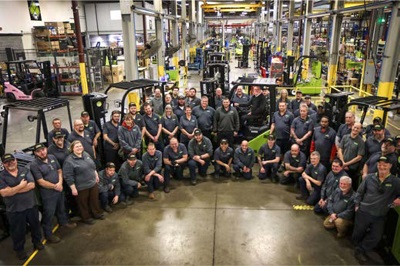 Lexington, KY – March 5, 2019 – CLARK Material Handling Company, one of the most recognized forklift brands in North America, plans to expand facilities at its North American corporate headquarters in Lexington, Kentucky by adding a third facility to the company’s manufacturing operation. In conjunction with this expansion, CLARK will begin re-shoring to Lexington production of its “heart-of-the-line” internal combustion products, the “S-Series.” Volume production of the S-Series is expected this summer.
 Like anything else in life, whether it’s your car, your home or even your body, planning and conducting preventive maintenance creates long-term benefits that are well worth the investment. Why would your forklift and other materials handling equipment be any different?
 Cal-Lift Inc.