Building on the success of it’s S-Series internal combustion models, CLARK Material Handling will soon ad to the line-up it’s first S-Series Electric model.
The SE15-25T 3-Wheel model will complement the internal combustion models with many of the features that make the S-Series line-up SMART, STRONG and SAFE.
The SE15-25T, with capacities up to 5,000lbs. electric will be built at CLARK’s Lexington, KY manufacturing facility and a few of the advancements will include:
All-electric braking system with regen motor braking
Spacious operator compartment
Reduced-height overhead guard
Industry leading initial step height
Great right-angle stacking ability
The only OEM with a 5,000lb capacity electric three-wheel
Tall and short battery compartment options
CLARK’s new S-SERIES three-wheel electric lift truck extends their legacy with a SMART – STRONG – SAFE lift truck that meets the challenging and changing needs of customers. For use in manufacturing, warehousing, bottling and logistics – along with a variety of other instances – this new electric lift truck may soon become the workhorse you’ve been looking for. And while they are launching it the coming months and really can’t show it to you yet, that doesn’t mean you can’t be one of the first to hear about it! Follow this link and be among the first to get information on this great new truck! Or just scan the QR code below.
TaylorTrak Pro®Provides Real Time Information to Help Maintain Healthy Fleets and Reduce Cost.
TaylorTrak Pro® Hardware is integrated into your equipment, interacting with our robust Taylor Integrated Control System (TICS) to ensure your equipment is communicating with you.
TaylorTrak Pro®provides access to machine data through WIFI or cellular network coverage. It enables comprehensive and flexible remote monitoring, asset tracking, maintenance scheduling and much more.
USER-FRIENDLY INTERFACE
TaylorTrak Pro® gives you easy, intuitive access to comprehensive information about your equipment’s performance and condition. Plus, with customizable alerts sent directly to a smart device, you’re always aware when a critical need arises.
Accurate, up-to-date information available across multiple platforms (desktop, tablet, smart phone)
Instant status updates on individual pieces of equipment
Alert notifications sent via SMS text and email to the proper personnel
Customizable alert preferences based on the level of information you request
Current status of all engine parameters
Alert notification of critical engine parameters
Current fuel level and total fuel usage graphs/reports
ADVANTAGES OF TAYLORTRAK PRO®
ANALYTICS & REPORTING
Optimize Work Flow
Instance Access to Historical Data & Time Based Reporting
Compare Overall Fleet Performance
Detailed Performance Data Delivered to Your Fleet Manager
Tire Pressure Monitoring System
SCHEDULED MAINTENANCE
Plan & Track Maintenance. Use recommended Taylor Service Intervals or customize to fit your needs.
Receive alerts to notify you of approaching “scheduled” maintenance
Track individual machine and fleet maintenance history
Easy access to your Local Dealer Service Network
GPS MAPPING & SITE BOUNDARY MANAGEMENT
Real-time GPS equipment location on easy-to-use maps
Ability to Geo-fence an area and receive “Breach” alerts
GPS “Breadcrumbs” – Historical trails of where a piece of equipment has been over customized time-frames
Easily identify asset locations through color coded GPS map pins
Cal-Lift is Northern and Southern California’s source for American Made Taylor Machine Works high-capacity material handling equipment. Visit our Taylor Machine Works page to learn more about the Taylor line-up. We are also your source for OEM Taylor parts, service, planned maintenance and rentals.
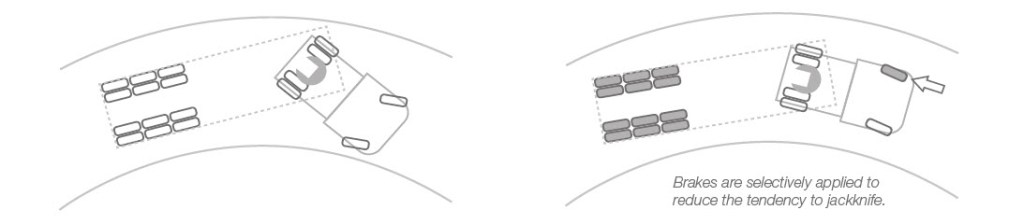
To comply with the standards set by the Department of Transport and the National Highway Traffic Safety Association for trucks that operate in approved applications, all new Kalmar Ottawa T2 Terminal Tractors can be equipped with an optional Electronic Stability Control system.
This added safety feature ensures safer load handling and is the first of its kind in the Terminal Tractor industry. When you order a new DOT/EPA compliant Kalmar Ottawa T2 Terminal Tractor with either a 116”, 126” or 136” wheelbase our new Electronic Stability Control (ESC) system can be fitted as an option.
Enhanced Safety
Your new DOT/EPA compliant diesel truck not only can be fitted with ESC, it also has an Anti-Lock Braking System (ABS) and a Traction Control System fitted. Making your truck even safer when being operated on public roads.
What is the Difference Between ABS and ESC?
Anti-locking braking systems stop your wheels from locking up when you apply the brakes, this allows for the driver to maintain control without the vehicle skidding. While the ESC system is able to apply the brakes to individual wheels to help maintain stability, particularly when the truck is at risk of jackknifing or spinning. This is done by the system automatically reducing the engine throttle and selectively applying the trucks brakes.
LEXINGTON, KY – April 1, 2021 – CLARK Material Handling Company, a top-ten global manufacturer of forklift trucks and spare parts, announces an expansion of the CLARK standard warranty for Carriage to Counterweight and Powertrain coverage for up to three years. Specifically, beginning April 1, 2021 the CLARK Protection Plan standard warranty now covers:
Full “Carriage to Counterweight” for two years or 4,000 hours, whichever comes first
Powertrain for three years or 6,000 hours, whichever comes first
This warranty change actively demonstrates the high-quality engineering, manufacturing and componentry that goes into each CLARK product. This new and expanded “bumper to bumper” standard warranty ensures that when purchasing a CLARK product, it is indeed “Built to Last.”
“CLARK customers have come to expect the highest quality from their CLARK forklift. This new two-year/4,000-hour warranty is yet another way we’re standing behind the quality of our product and helping customers achieve their business and production goals,” noted Chuck Moratz, Senior Vice President of Engineering.
Intended to provide end-customers peace of mind when purchasing products for their business, the new CLARK Protection Plan two-year/4,000-hour warranty ensures that, on the off-chance, an electrical or mechanical issue arises with their CLARK forklift during that period, CLARK will be there for them.
To complement this expanded standard warranty, CLARK has also released new optional warranties for which information is available through CLARK dealers.
“In the Material Handling Industry, as with many industries, truck down time is a big issue – especially now with the consumer market as it is,” commented Moratz. “Our new and expanded warranty lets our customers know they can buy with confidence when they buy a CLARK. We stand with our customers as we are ‘Built to Last.’”
CLARK’s new WPL40, a 4,000lb. capacity, Lithium Ion powered electric pallet jack
FEATURES
PIN-WHEELING
With the handle in the fully upright position, the WPL40 pin-wheels in and out of tight spaces using a smaller, tighter turn-radius and moves up to 4,000 lbs in close-quarters with ease.
HYDRAULICS
The permanent magnet DC pump motor and chrome-plated lifting cylinder provides for smooth and efficient lifting, as well as greater durability.
BRAKES
The electromagnetic brake, mounted on the motor armature shaft, multiplies the braking power through the transmission and provides good stopping power when the control tiller is raised to the full vertical position or lowered to full horizontal position beyond the operating range. Additionally, the armature-mounted brake design:
Keeps the braking mechanism clear from dirt and debris
Automatically engages the parking brake when the truck stops and the handle is released
Features an anti-rollback and neutral braking system for improved safety in operation
ERGONOMIC STEER/CONTROL HANDLE
With travel, lift and lower functions all located in an ergonomic operator handle, operators can access all controls without having to lift a hand from the handle. Additionally, the WPL40 control-handle includes:
A solid steel tubing control tiller arm and control handles meant to outlast cast aluminum or plastic designs
Angled control handle grips allowing easy operation with either hand
An emergency reversing switch, thumb control, and horn — all standard
The low-mounted tiller arm supports minimum steering effort for greater operator comfort
The gas-assisted spring gently returns the control tiller arm to a vertical position
Crawl speed switch enables the operator greater-ease-of-use in tight spaces
FORK DESIGN WITH TAPERED TIPS
The WPL40’s fork construction and pallet entry slide system, which allows a lifting of the forks up-and-over the bottom board, provides easy pallet access. The forks, at 27” OAW x 46.0 OAL, can achieve a maximum elevation of over 7.5”. The shape of the load wheel housing or toe box, ensures pallet entry and exit can occur without the need for wearable rollers.
48-VOLT LITHIUM-ION BATTERY POWER OUTPUT
The Lithium-Ion 48-Volt battery provides the same power-output all the way through the charge cycle — giving the operator the same power during the first 10% of the charge as the last 10% as well as surpassing the truck charge power from similar lead-acid batteries.
ELECTRICAL COMPONENTRY
The water-resistant connectors and shrouded wiring harness supply power reliably to key components. The WPL40 system includes a key switch, emergency power disconnect, and onboard dock for Easy Exchange Battery.
SERVICEABILITY
The removable covers and the modular design of the WPL40’s components provide for easy maintenance with simple hand tools. And the two-piece drive wheel reduces the complexity of tire changes.
GEAR TECHNOLOGY
The state-of-the-art optimized gear technology supplies advantages such as low noise level, high efficiency, and high performance.
MAINTENANCE
The fully adjustable pull rods and torsion bar extends the WPL40 operating life in delivery truck and dock use applications. The WPL40 goes further with easily accessible grease zerks for easier maintenance.
For more information or a quote on the WPL40, please contact us at 800-322-5438.
Even a well-maintained forklift fleet needs to be replaced at some point in time. Knowing exactly when can be a difficult thing to ascertain. Industry averages reveal that somewhere between 8,000 hours and 10,000 hours of use is when you’re going to reach an optimal point to replace your forklifts. Some questions to ask to help determine if it is time include:
What type of operation does each forklift perform each day? Does your forklift face harsh conditions like heat, dust, rough terrain or any other condition that would put undue stress on the engine, transmission or hydraulics?
Is your forklift put to the test each and every lift, lower and transport? Does it handle its maximum capacity more than half the time, or less?
Does your forklift do a lot of starting, stopping and backing up? Does it frequently conduct long runs in large open areas?
Have you adequately maintained the equipment using a regularly scheduled Planned Maintenance Program?
How has the cost of repairs for each unit changed over the past two to three years? A dramatic increase in repairs (not normal planned maintenance or normal wear parts) can indicate that you’re spending more than you should on repairs. A cost-per-hour analysis may be in order.
The not-so-obvious costs associated with worn forklifts is downtime, lost productivity and the short-term cost of replacing them with rentals. These costs may not show up on a unit’s cost per hour, but they are costs nonetheless. Keeping count of rentals due to downtime and repairs is essential in determining replacement, as new forklifts will all but eliminate your rentals due to downtime.
There are other reasons that may eliminate the guesswork and actually require you to replace your aging fleet:
Safety features are outdated and cannot be updated properly. For example, safety requirements may change and a new safety harness system would replace traditional seatbelts. Also, if safety options have improved fleet safety and the cost to update them would be prohibitive, it would be a good time to consider replacement.
If your forklifts are exhibiting signs of unsafe operating conditions like hydraulic failure, equipment shaking or jerking or leaking components, it’s likely time to replace the units.
Another reason to consider updating your forklift fleet are improvements in technology, hardware or performance. For example, now that electric forklifts have become more powerful and reliable outdoors, it could be a great time to consider replacing your IC forklifts.
As you can see, looking at the hour meter is not the sole solution that it used to be to consider replacement. We would be glad to consult with you to assess your fleet condition and help you determine if now is a good time to consider your forklift fleet retirement or replacement. Check out our line-up of new forklifts and terminal tractors, then give us a call at 800-322-5438 for a demo and quote.
Even a well-maintained forklift fleet needs to be replaced at some point in time. Knowing exactly when can be a difficult thing to ascertain. Industry averages reveal that somewhere between 8,000 hours and 10,000 hours of use is when you’re going to reach an optimal point to replace your forklifts. Some questions to ask to help determine if it is time include:
What type of operation does each forklift perform each day? Does your forklift face harsh conditions like heat, dust, rough terrain or any other condition that would put undue stress on the engine, transmission or hydraulics?
Is your forklift put to the test each and every lift, lower and transport? Does it handle its maximum capacity more than half the time, or less?
Does your forklift do a lot of starting, stopping and backing up? Does it frequently conduct long runs in large open areas?
Have you adequately maintained the equipment using a regularly scheduled Planned Maintenance Program?
How has the cost of repairs for each unit changed over the past two to three years? A dramatic increase in repairs (not normal planned maintenance or normal wear parts) can indicate that you’re spending more than you should on repairs. A cost-per-hour analysis may be in order.
The not-so-obvious costs associated with worn forklifts is downtime, lost productivity and the short-term cost of replacing them with rentals. These costs may not show up on a unit’s cost per hour, but they are costs nonetheless. Keeping count of rentals due to downtime and repairs is essential in determining replacement, as new forklifts will all but eliminate your rentals due to downtime.
There are other reasons that may eliminate the guesswork and actually require you to replace your aging fleet:
Safety features are outdated and cannot be updated properly. For example, safety requirements may change and a new safety harness system would replace traditional seatbelts. Also, if safety options have improved fleet safety and the cost to update them would be prohibitive, it would be a good time to consider replacement.
If your forklifts are exhibiting signs of unsafe operating conditions like hydraulic failure, equipment shaking or jerking or leaking components, it’s likely time to replace the units.
Another reason to consider updating your forklift fleet are improvements in technology, hardware or performance. For example, now that electric forklifts have become more powerful and reliable outdoors, it could be a great time to consider replacing your IC forklifts.
As you can see, looking at the hour meter is not the sole solution that it used to be to consider replacement. We would be glad to consult with you to assess your fleet condition and help you determine if now is a good time to consider your forklift fleet retirement or replacement. Just give us a call at 800-322-5438. Visit our website to see our new forklift line-up.
The last decade has led to many improvements in electric forklifts. Not only have they been built to withstand outdoor usage; battery and charger technology has changed dramatically. These advancements have led to a dramatic increase in electric forklift sales. The chart below shows the increasing disparity between electric and traditional forklift deliveries (chart from Industrial Truck Association presentation to the ITA President’s Forum in Coronado, California in 2019)
In 2019, the number of electric forklifts increased to 70% of forklift deliveries. As you can see, the benefits are starting to be realized by more and more companies.
Driving this growth in the electric forklift market are two primary considerations: costs and environmental concerns. While capital costs for electric forklifts are higher than their internal combustion counterparts, the decrease in fuel and maintenance costs more than make up the difference over the forklift’s useful life. But there are other factors that influence the decision-making process and causing more users to convert to electric forklifts. The top four that we observe include:
Costs – As previously stated, an electric forklift and accompanying batteries and chargers result in a higher capital investment upfront, but those initial costs are more than compensated for over time. An electric forklift produces no heat, has far fewer moving parts (no belts, fans, pumps, filters, oil, etc.).
Some estimates put maintenance costs for electric forklifts at 40% less than internal combustion counterparts (First Energy)
In addition to maintenance costs, energy costs for electric forklifts are far less costly than for LPG-, diesel- or gas-powered forklifts. The cost per hour to operate an internal combustion forklift can be as much as $.75. LP tanks are almost always exchanged with fuel still remaining in the tank. Unless you’re getting credit on unused LP fuel, you’re paying for fuel that you’re giving back to your LP provider. Visit the Electric Power Research Institute to use their savings calculator to compute a rough estimate of your own savings. We realize that not all material handling operations are identical and your savings may vary, but the illustration certainly demonstrates that it is less costly to operate electric forklifts.
Health and Safety – Electric forklifts eliminate harmful carbon monoxide and carbon dioxide from your facility, greatly improving the air your employees breathe. The effects of a build-up of CO can result in nausea, headaches, disorientation and in some cases, hospitalization and even death. This is compounded in the colder months where windows and dock doors are often not opened.
Utilizing electric forklifts allows you to keep the doors and windows closed at any time without fear of creating an unsafe work environment for your employees.
Flexibility and Performance – Just 10 years ago, electric employees could rarely compete with internal combustion forklifts, particularly outdoors. This is no longer the case. Electric forklift and charging technology have advanced greatly: fast-charge system, opportunity charging, sealed batteries and motors, and Lithium Iron Phosphate battery technology, which eliminates battery-charging altogether. Battery capacity and energy efficiency have also allowed electric forklifts to be produced in much higher capacities than in previous years. These advancements have changed the landscape of electric forklift operation. There are now few operations where electric forklift cannot compete with IC forklifts.
There has never been a better time to explore electric forklifts to replace your internal combustion fleet. Contact us at 800-322-5438 for a consultation and quote. You will be on your way to a cleaner and more efficient material handling and storage operation.
Often times companies find them in a situation where they need to increase their forklift or other material handling and storage equipment fleet, but want to conserve capital for other operational objectives. This is where renting equipment on a short-term or long-term basis can be a great alternative to purchasing or traditional financing. These benefits include:
Cash Conservation – There is no cash outlay to obtain equipment under a Long-Term rental agreement. Save your cash for alternatives that produce profits for your bottom line.
Pay for what you use – Long-Term rental agreements are based upon the expected hours and operating conditions that you will use the equipment. Unlike purchasing equipment where you are paying for 100% of asset (a depreciating asset), you pay based upon the expected usage rate of the equipment.
Rental payments are 100% tax deductible* – Rental payments are an operating expense and are 100% deductible as a business expense. No confusing depreciation schedules or damaging tax ramifications at years-end. *(consult your financial adviser to confirm your tax status)
Fixed payments, no maintenance surprises – Long-Term rental agreements typically include normal maintenance. We own the equipment, so maintaining it is our responsibility. Leave the surprises to us and keep your material handling costs consistent and predictable.
Eliminate your parts and service departments – If you currently own your fleet and maintain it you need mechanics, tools and parts. Improve warehouse and plant space by eliminating the need for stocking parts and providing space to service equipment.
Eliminate obsolescence – Long-Term agreements can provide for upgrades should your business change. Don’t get stuck with equipment you no longer need due to a change in your business plans. We will find a home for the old equipment, and provide you with equipment you need today.
Keep your credit line clear – Unlike financing equipment, Long-Term Rentals have little impact on your ability to borrow money to increase your business.
Flexible terms and equipment – Whether you need new or used equipment for your operation we can provide you with the equipment you need at the terms you need. From one year to eight we can build a Long-Term rental agreement that meets your business needs.
Eliminate stand-by equipment – Do you purchase more than you need to allow for break-downs and cyclical needs? Our forklift rental fleet stands ready to supply you with immediate equipment when a need arises.
Renting hedges against inflation – Reduce the risk of labor and parts prices increases by fixing your monthly payment now for the term of your agreement.
Generate cash now – Trading in your current fleet can generate immediate cash for operations.
Flexibility, reliability and consistency are your results when you rent Long-Term with Cal-Lift Inc. In addition you will have the comfort of knowing that you have a team of professionals with a proven track record as a true partner in your material handling operations. We take all the hassle out of acquiring and maintaining a fleet of forklifts and leave you with more time to manage your business.
We would appreciate the opportunity to discuss rentals options for your company. To schedule an appointment contact us at (800)-322-5438.
Forks and chains lift hundreds of thousands of pounds each shift, and unchecked wear on either can cause a load to come crashing to the ground. This can result in severe damage to property, or even the death of an employee. Below are some specific areas to inspect to help ensure forks and chains are in safe operating order.
Fork Inspection. Knowledge of metallurgy or its equivalent is not necessary to perform OHSA inspections, but operators must nonetheless pay attention to these key metal-related areas when examining forks.
Rated load capacity. Are the forks rated to carry the loads they are handling? An excellent online calculator is available here.
Surface cracks. Inspect each fork top and bottom for surface cracks. Pay close attention to the heel area and the welds to the areas that attach the forks to the lift truck. These areas are most likely to develop cracks. If a crack is found, the fork must be replaced before the lift truck is put back into service. OHSA does not permit a damaged fork to be repaired.
Straightness of the blade and shank. If either the shank or the blade has any sort of bend, the fork must be replaced before the lift truck is put back into service.
Excessive angle. If the shank and blade angle exceed 93 degrees, the fork must be replaced before the lift truck is put back into service.
Fork tip height variances. If the fork tips exceed 3 percent of the length of the blade, the forks need to be replaced before the lift truck is put back into service. For example, for 48-inch forks, the differences in the heights of the tips of your blades cannot exceed 1.44 inches.
Positioning lock. If the positioning lock is inoperable, it must be replaced before the fork is put back into service on the lift truck.
Normal wear. Use calipers to measure the heel and the blade for wear. These are the areas that wear most quickly. Once wear reaches 10 percent, the fork must be replaced. Ten percent wear results in a 20 percent reduction in rated fork capacity and represents a significant exposure for accident.
Chain Inspection. Forklift chains endure tremendous stress during operation and are subject to additional damage and wear by environmental conditions such as dust, rain and industrial chemicals. Carefully inspect chains for the following:
Chain elongation. Elongation of more than 3 percent indicates a 15 percent reduction in strength and means the chain should be replaced.
Rust and corrosion. Chains showing any rust or corrosion should be replaced. For maximum protection, chains must be completely lubricated at all times.
Plate cracking. Inspect closely for cracks. The discovery of any crack means the chain should be replaced before the forklift is put back into service.
Protruding or turned pins. Lack of lubrication results in friction between the plates and the pins, causing the pins to twist and turn their way out of place. The result is chain failure.
Misalignment. Look for wear patterns on pinheads or outside plates. Continued operation will result in damage to the chain and sheaves, potentially causing the chain to fail.
Chain anchors and sheaves. Inspect anchors for misalignment, damage or undue wear. Anchors with worn or broken fingers must be replaced.
Cal-Lift strives to help operators maintain compliance with OSHA regulations, but more importantly, we help maintain both forklifts and chains, ensuring employees are safe and productive.
If you find your forks or chains worn or damaged, please call us at 800-322-5438 to get a replacement quote.




 Cal-Lift Inc.