Selecting The Right Tires for Your Forklifts

It is easy to overlook the humble tire when it comes to maintaining a forklift. Choose the wrong tire, however, and you could end up with a dramatic increase in fleet operating costs or, worse yet, increased safety risks. Choose the right one, and you can realize significant cost-savings, improved safety, and a more efficient operation. For example, a properly chosen tire can last 40 percent longer. Read “Minimizing the Cost of Your Forklift Tires.”

Tires are a safety item that is often over looked, but a good set of tires provide the traction, stability and ground clearance essential for safe lift truck operation. Excessively worn tires reduce ground clearance; bring the bottom of the mast and the engine oil pan dangerously close to the ground.

Making those right decisions can be difficult, because contrary to conventional wisdom, tires are very complex components. There are many brands, types, compounds and treads, which means you must be fully armed with data before making a purchase. Here are some questions we typically ask our customers:

  1. What type of fuel (IC or electric) does your forklift use?
  2. How heavy is your typical load?
  3. How long is your typical run?
  4. What kind of problems are you experiencing with your tires now?
  5. Does your forklift operate over dock plates?
  6. On what types of surfaces do you operate your forklift?
  7. Is your forklift used for multiple shifts?
  8. What percent of time is your forklift loaded?
  9. What is your average and top speed of your forklift?
  10. If you are evaluating tires for more than one forklift be prepared to answer the previous questions for each unit.

In addition to knowing the specifics about your tire needs, it will be helpful for you to understand the unique wording used for forklift tires. Durometer is used to describe the hardness of forklift tires. The higher the durometer number, the harder the tire. Most load tires range in durometer from 83 to 95. Our industry uses a couple of standard classifications that cover 80 percent of the tires purchased today.

Softer tires, like rubber, provide better traction for facilities where frequent maneuvering is required. They also are more forgiving of floor debris and offer the operator a more comfortable ride. Be aware, however, tires made of softer compounds create heat and wear faster, making them a less desirable choice for applications where maximum speed and long runs are the norm.

Harder tires are excellent for maximum loads, multiple shifts, long runs and high speed applications. They will wear better and last longer than tires made of softer compounds. But the ride will be harder and the tire more vulnerable to floor debris. They offer less resistance and are well suited to operators especially concerned with energy efficiency. Universal Compound tires are good all-around tires for the average user, but not always the best choice for durability and traction depending upon your application.

The actual tread of the tire is important to consider, too. Pay special attention to whether you want a smooth tire, such as for indoor applications, or a treaded one, for forklifts operated outdoors or over uneven terrain.

We recommend operators track by application how well their tires perform. Create a spreadsheet with rows for each of your forklifts. Track the date tires were purchased, the type of tire, the reason for the replacement and the hour meter reading. Over time, you will see trends emerge that will help you adjust purchasing decisions for the type of performance you need, such as correlations between harder tires and damage, or softer tires and premature wearing. Inspecting tires is always part of our Planned Maintenance Program. 

In the end, there is no one tire that can optimize tread life, traction, durability and fuel efficiency. The key is finding the best fit for each of your forklift material-handling applications. Working with a company that is knowledgeable about forklift tires can assist you in selecting the right application and optimize your fleets for performance.

Cal-Lift Inc. has been helping companies select the right tires for forklifts, terminal tractors and container handlers for decades. Give us a call today at 800-322-5438 to discuss your tire performance and let us help you improve your bottom line!

California CORE Incentives for 2024 Announced

The Clean Off-Road Equipment Voucher Incentive Project (CORE) is a multi-million dollar incentive project intended to encourage California off-road equipment users to purchase or lease currently commercialized zero-emission off-road equipment. This streamlined voucher incentive project helps offset the higher cost of zero-emission technology with a point-of-sale discount. There is no scrappage requirement, and additional funding is available for charging and fueling infrastructure, equipment deployed in disadvantaged communities, and small businesses. Three of our Taylor Machine Works Container Handlers qualify for this year’s program. They include:

Taylor Machine Works

ZLC994 Electric Loaded Container Handler

Capacity: 90,000lbs.

Wheel Base: 236″

Mast: 31.5′ UV

See More Specs

Base Voucher Amount: $890,000

Taylor Machine Works

ZLC995 Electric Loaded Container Handler

Capacity: 90,000lbs.

Wheel Base: 236″

Mast: 42′ UV

See More Specs

Base Voucher Amount: $900,000

Taylor Machine Works

ZLC996 Electric Loaded Container Handler

Capacity: 90,000lbs.

Wheel Base: 236″

Mast: 51.5′ UV

See More Specs

Base Voucher Amount: $920,000

Additional Voucher Enhancements

Are you eligible for a voucher plus-up enhancement?

Equipment deployed in Disadvantaged and Low-Income Communities (DAC) are eligible for a 10% enhancement of the equipment’s base voucher amount. Visit CARB’s Auction Proceeds Disadvantaged Communities page to see if you qualify for a DAC Enhancement.

Small businesses are eligible for a 15% enhancement of the equipment’s base voucher amount. Your business qualifies as a small business if it meets the definition in Government Code Section 14837 (d) (1) (A); a small business is defined as “having an annual revenue less than $15 million per year and 100 employees or less.”

For more information or a consultation about CORE and our line-up of Taylor Machine Works Electric Container Handlers, contact us at 800-322-5434.

CLARK’s Electric Workhorse, The SE

SE25-SE35 S-Series

5,000lb. / 6,000lb. / 7,000lb. 

Solid Pneumatic Tires

Electric Forklift

Introducing the all-new CLARK SE25-35, the latest addition to the CLARK S-SERIES lineup of SMART, STRONG, and SAFE forklifts! With a capacity range of 5,000-7,000 pounds, an integrated 80V Lithium-Ion battery, and advanced safety features to keep your operations running smoothly and safely shift after shift, the SE25-35 continues the legacy of the S-SERIES line.

Ideal for customers that need to seamlessly transition from indoor to outdoor spaces, the SE25-35 provides all of the ergonomics and functionality of an IC truck without the harmful emissions and operation volume.

SE25-SE35 S-Series Electric Features

SMART – The SE25-35 integrates SMART features including:

  • 6 inch” LCD SMART Dash
  • On-Board Diagnostics Through Dash Display Screen
  • ZAPI Controllers for Advanced Control and Communication
  • Three Selectable Performance Modes and Turtle Mode for Ultimate Operational Control
  • Integrated 80V Lithium-Ion Battery with Diagnostics in SMART Dash
  • Vertical Mast System Allows for Fork Leveling Regardless of Tilt

STRONG – The SE25-35 builds on the CLARK Built to Last commitment with STRONG features including:

  • Full Capacity Range of 4,000 to 7,000 Pounds, for a Solution That Fits all Needs
  • Integrated Lithium-Ion Battery is Practically Maintenance Free, With No Watering Required
  • Fully Welded, Heavy Gauge Frame
  • Six Roller Carriage with Side Thrust Rollers Improves Stability and Minimizes Mast Deflection

SAFE – Safety is at the core of all CLARK products, and the SE25-35 continues that legacy with excellent SAFE features including:

  • Self-Activating Parking Brake Engages When Truck Comes to a Rest and Operator Leaves the Seat
  • Wet Disc Service Brakes Require Less Maintenance and Have Lower Overall Cost of Ownership Compared with Standard Drum Brakes
  • Nested I-Beam Mast is Durable and Reliable
  • Twin Primary Cylinder Design in Mast Provides Better Operator Visibility and Improved Safety
  • Counter Rotating Wheels Allow SE20-35 to Achieve Zero Turn, Reducing Turn Radius and Allowing Operators to Navigate Smoothly
  • Curve Cutback Feature Allows for Speed Control When Navigating Turns
  • Low Profile, Wider Truck for Increased Stability

NEW FEATURES

  • 6” SMART Dash Display with Audible and Visual Warnings and Lithium-Ion Battery Integration
  • Password Protected Access to Advanced Truck Settings
  • Three Performance Modes:
    • Economy, Standard, and Power
  • Improved Operator Ergonomics
  • Wider Floorboard for Improved Operator Ergonomics
  • Updates to Motor Design to Reduce Operational Noise

VERTICAL MAST SYTEM

The CLARK Vertical Mast System allows operators to pick product with confidence, by ensuring forks are level regardless of the degree of tilt on the mast.

ERGONOMICS

  • CLARK-Standard Vinyl Full Suspension Seat
  • Hood Mounted Levers in S-SERIES Styling with Forward/Reverse and Horn Button Options on Levers
  • Ergonomically Designed Pedals for Optimal Ease of Operation
  • Optional Fingertip Controls Allow for Improved Operator Ergonomics
  • Optional S-SERIES Style Cabin with Heat

SOLID AND VERSATILE

  • Field-tested and strength-proven drive unit, steer axle, and upright
  • Welded heavy gauge frame provides lasting durability
  • CLARK Nested I-Beam mast designed for stability and longevity
  • Full capacity range of 4,000 to 7,000 pounds to accommodate a wide range of applications

INDOOR & OUTDOOR APPLICATIONS

Increase your productivity while minimizing cost with the SE25-35. With the ability to seamlessly transition between indoor and outdoor spaces, operations no longer need two trucks to accomplish what the SE25-35 alone. The low profile, wide stance, and durable composition of the SE25-35 makes it ideal for operations with paved outdoor spaces, as well as indoor manufacturing facilities. The optional CLARK S-SERIES heated cabin allows operators to transition from indoor to outdoor operations even in harsh weather conditions.

VIDEOS

CLARK SE25-SE35 S-Series SAFE Features
CLARK SE25-SE35 S-Series SMART Features
CLARK SE25-SE35 S-Series STRONG Features
CLARK S25-S35 S-Series ERGONOMIC Features

MORE INFORMATION

For more information, a demo or quote on a new SE25-SE25 Electric forklift from CLARK Material Handling, please contact us at 800-322-5438.

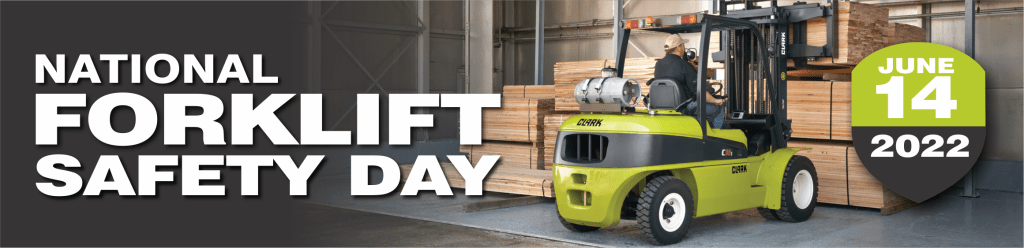
Cal-Lift Celebrates Forklift Safety Day 2022

Forklift Safety Day 2022 List of Events

With the past two year’s events being held virtually, it’s exciting to be able to hold Forklift Safety Day 2022 in person, in Washington DC. And while most of us will be unable to attend, below is a list of activities planned to recognize and bring attention to the potential dangers of forklift operation.

Monday, June 13, 2022 (Willard InterContinental Hotel)

  • 3:00 PM – 5:00 PM – Educational Session (open to all ITA Members & Invited Guests) Buchanan Room
    • OSHA Updates
    • Current Congressional Activity Updates
    • Trade/other
      6:00 PM – 7:00 PM – NFSD Reception (Open to all ITA Members & Guests) The Nest Room

Tuesday, June 14,2022

  • 7:30 AM – 8:30 AM – Breakfast (Peacock Lounge at Willard InterContinental Hotel)
  • 9:00 AM – 11:00 AM – NFSD Event/Presentations (National Press Club, Main Ballroom)
  • 11:30 AM – 4:00 PM – Congressional Meetings (Capitol Hil)

CLICK HERE for more information on the event and register at the Industrial Truck Association’s website.

This year’s NFSD Chair is Jonathan Dawley, President & CEO of KION North America.

DC Velocity is the media partner for National Forklift Safety Day 2022. 

What You Can Do to Recognize Forklift Safety Day

Forklift Safety Day is a great opportunity to review your forklift safety program and/or plan. And if you don’t have a program or plan, this would be a great opportunity to create one! 

Start with Training

  • Are all of your forklift operators up-to-date on their training. Remember, forklift operators must receive refresher training every three years, and be evaluated on the equipment that they operate. 
  • How well do you know your operators? Download our Forklift Operator Questionnaire to get to know their experience operating lift equipment.

Inspections and Maintenance

  • We know that pre-shift inspections of all equipment are required by OSHA. But did you know that by taking a few minutes to inspect equipment not only improves safety, it helps you identify small issues before they blossom into giant repair or injury and damage headaches. 
  • Planned Maintenance – This is a great opportunity to review your current PM program. Is it being executed properly according to intervals  you require? Is the Planned Maintenance complete and thorough? A thorough and robust Planned Maintenance program is key to maintaining safety and productivity of your forklifts. Learn more about our Service Department.

For more information on safety, planned maintenance, service or repair of your forklifts, please visit our website at www.cal-lift.com, or give us a call at 800-322-5438.

Forklift Safety is No Accident

We’re here to help you maintain safety in your forklift operations by ensuring all your employees that might operate a forklift, know the limitations and dangers of forklifts AND to ensure they are all operating a peak efficiency and safety. To speak to one of our professional about any aspects of your forklift fleet’s safety or performance, just give us a call at 800-828-2804.

CLARK TWLi20 Lithium Ion Powered Forklift

TWLi20

100% AC Electric 48V Lithium-Ion
4000 lbs

Designed around the powerful 48V Lithium-Ion battery, the TWLi20 readily meets the needs of customers big and small. CLARK proudly adds the TWLi20 Three-Wheel Electric lift truck with integrated Lithium-Ion battery to its fleet of electric trucks. Designed to increase productivity and efficiently, powered by a Lithium-Ion battery, and designed with the operator in mind, the TWLi20 builds on the CLARK legacy of excellent, Built to Last trucks.

Lithium-ion Convenience, Efficiency and Productivity

Lithium-Ion batteries are efficient and maintenance-free, with no battery watering required. The easy-to-operate charger eliminates the need to remove the battery when charging, as well as gives you the ability to use opportunity charging to keep your forklift running all shift long. Lithium-ion batteries are also longer-lasting, more reliable, and require less service than traditional lead-acid batteries.

Operator Comfort

With the slim profile of the lithium-ion battery, the TWLi20 has a spacious operator compartment, with excellent ergonomic features including a retractable seatbelt, fully adjustable armrest, and dual joystick controls that are intuitive and comfortable for operators to use. Additionally, the wide-view mast and high operator seating position allows for excellent sightlines, providing both comfort and enhanced safety for operators. 

Performance

The TWLi20 has a tight turn radius, making it perfect for indoor and narrow aisle applications. The dual-joystick controls direct the movement of the forks, sideshifter, and fork positioner, allowing the operator to navigate the facility with ease. The chasis has a low center of gravity and wide tires, which provides excellent stability for the truck. 

Low Cost of Ownership

The fully enclosed drive, lift, and steer motors lead to less downtime, lower overall cost of ownership, and a higher ROI compared to other models without. The all-electric brakes on the TWLi20 and the powerful Lithium-Ion battery are both maintenance-free, with no brake pads to change or battery watering required. And the hydraulic lift components are sealed against dirt and water, protecting them from contamination. 

We are Southern California’s source for CLARK Material Handling equipment, service, OEM parts and rentals. For more information on any of the great CLARK products, please contact us at 800-322-5438.

Kalmar Ottawa T2E Electric Terminal Tractor

Kalmar’s second generation of electrically powered terminal tractors, (also known as yard trucks) are available globally and will help improve the eco-efficiency of your operations while maintaining the highest levels of productivity and safety. With a range of modular battery options and charging solutions, we can work with you to design a solution that will deliver for your business.

What makes this the best electrically powered terminal tractor?

There are three big differences, and many small ones, that make our new generation of electrically powered terminal tractors the best. You will benefit from:

Charging time cut in half. Our first big change has been to incorporate a DC FastCharge System, which has allowed us to cut charging time in half.

No more transmission. The second is that we have removed the transmission from the driveline, moving to a direct drive solution where the electric motor powers the drive axle, reducing the complexity of the driveline.

Ability to operate in extreme temperatures. Thirdly we have included an Active Thermal Management System, which will allow your electric terminal tractor to operate optimally at full power in extreme temperatures.

What models are available?

There are five models available for you to choose from:

  • three specifically designed for distribution applications (including an on-road certified version available for North America – DOT approved)
  • two for container ports and terminals


Do I get a choice of batteries and chargers?

  • There are two different charging solutions available with charging capacities of 24-180kW.
  • Either 152kWh or 184kWh batteries.

How eco-efficient is an electric terminal tractor?

Being electrically powered, your terminal tractor (also know as yard truck) will produce zero carbon emission at source, reducing your carbon footprint and improving your environmental credentials. You can cut your carbon emissions even further by using green energy sources where available or start to generate and use your own power. Getting an electrically powered terminal tractor is only the start of your eco-efficient journey. And we will be with you every step of the way.

Does your warranty extend to batteries and chargers?

All Kalmar Ottawa Electric Terminal Tractors come with a standard 2 year/6000 hour warranty and a 7 year/1000 warranty hour for the frame. Charging solutions are covered for 2 years and batteries for up to 5 years. Kalmar also offers a full range of service packages and genuine parts to keep your terminal tractor operating optimally, minimising downtime and maximising availability levels.

What is the difference between a Terminal Tractor, Yard Truck or Shunt Truck?

Yard Trucks, Shunt Trucks and Terminal Tractors are exactly the same machine used for cargo handling at distribution, ports and terminals and industrial facilities. These are just the different names that are used in different parts of the world. At Kalmar we refer to them as Kalmar Terminal Tractors globally.

See our complete line-up of Kalmar Ottawa Terminal Tractors at our website.

Where’s My Forklift? The Surge in Demand for New Material Handling Equipment

Since December 2020, when the forklift industry experienced a record order month, orders have exploded month after month. The chart below shows just how strong the demand for forklifts has become.

If this trend continues, which we expect it to, orders for 2021 will be up over 60% from the previous 3 years. This increase, combined with shortages in microchips which manage so many functions on forklifts, as well as other supply-related delays due to Covid 19, have greatly elongated lead times for new equipment orders.

What may normally be a 10 week lead time for a new lift truck, has increased to 8 to 10 months, with some specialized equipment waiting over a year for delivery. This shortage of equipment has created a ripple effect into other areas of our industry, namely rentals and used equipment.

It is getting increasingly more difficult to obtain rental equipment and used equipment, as these are being used to plug the holes created by the delays in new equipment delivery. We do expect this to begin to ease as chip manufacturing begins to catch up, but it will be several months before this occurs. Chip manufacturers are simultaneously playing catch-up for automobiles, other heavy machinery as well as nearly any vehicle managed by electronic components, which is nearly all equipment!

We are suggesting to customers to plan their 2022 needs, and place those orders very soon in order to prevent delays for 2022 equipment needs. We will certainly keep all of you posted on the progress our industry makes and work hard as always to find you the equipment you need.

Training vs. Teaching; Knowing the Differences

Training is imperative for not only safe operation of forklifts, container handlers and yard spotters, it improves productivity and your bottom line. We know that very experienced operators are worth their weight in gold. But how can we take a new operator and get them to that point quicker? The key lies in truly training them, not just teaching them the fundamentals then handing them the key.

Not to mention that in many cases, particularly in forklift operation, training is a requirement and failure to provide adequate training can result in costly fines as well as legal costs and civil awards if sued.

Too often we become focused on the regulation and the direct costs of non-compliance, namely fines and potential lawsuits. However, if we focus on truly making cultural changes in our organizations that revolve around a safer workplace, many other cost-savings will occur, including:

  1. Reduced worker’s compensation claims & premiums
  2. Reduced equipment and plant damage
  3. Improved maintenance conditions of equipment
  4. Improved productivity
  5. Enhanced employee morale

This is just to name a few. Too often satisfying OSHA becomes the goal and we “miss the forest for the trees.” Training is a never-ending process. Why? Because nothing is ever stagnant in a warehouse situation. There are almost daily changes involving equipment, processes, personnel, products or facilities, and the list goes on. Each change requires training or re-training to make sure each employee can become familiar and comfortable with the changes.

Re-training must take place each time “a condition in the workplace changes in a manner that could affect safe operation of the truck” , according to OSHA. To see a list of all conditions under which refresher training must occur, click HERE. This rather ambiguous definition could mean anything from a change in the products you carry (depending upon how they are handled) to changes in how you store your products. So as you can see, having a once-a-year operator training day would not even provide your company compliance with the letter of the regulation, much less keep your facility operating at an optimal level as it pertains to safety and productivity.

Let’s look at the differences in the pure definitions of teaching vs. training.

Train – To instruct as to make proficient. To guide the mental, moral, development of, etc…
Teach – To show how to do something. Instruct. To give knowledge, insight, etc…

Most traditional “training” programs are in-fact barely more than “teaching sessions.” In order to fully train, you must first start with the trainer. OSHA regulations regarding forklift operator training state: All operator training and evaluation shall be conducted by persons who have the knowledge, training, and experience to train powered industrial truck operators and evaluate their competence.” 

This means the person you are relying upon to meet these standards will need more than a three-day class in operator safety training. He or she will need to have significant experience with material handling equipment and all facets of operation as well as the ability to express what he or she knows in a logical manner so that the material is effectively transferred to your operators. This is very important particularly if your goal is truly training, and not simply compliance.

To learn more about how the human brain learns and how to “train” read “The Four Levels of Learning.”

The Four Levels of Learning

When you were learning to tie your shoes, it wasn’t a one-time demonstration by your mother. Rather it was a tedious task for both of you. Teaching and learning can be quite difficult and frustrating for the trainer and the trainee. Understanding how people learn and what it takes to become proficient at any task underscores the importance of a continual training program for your forklift operators, or for anyone that’s learning anything in your organization to help keep it running.

Unlike learning to tie your shoes, your company is a dynamic, flowing organization. Things are rarely the same next year as they are today. New equipment, new employees, new products, new fixtures, the variable set goes on and never ceases to change. Adapting to these changes means understanding how we learn and the stages of learning we all pass through before become proficient at anything. Being able to identify where each employee is in the process helps you minimize the training costs and maximize productivity. Let’s start at the first level of learning.

The Unconscious Incompetent – Before you wore shoes, you had no idea that you didn’t know how to tie them. This is the most ignorant stage of learning, but is the first. There are many things your employees don’t know, that they don’t know, but you do know. It’s important to understand this. We often assume “they know how a Clark forklift operates.” But do they? Personal interviews or questionnaires are frequently used to determine what someone knows, and doesn’t know, which leads us to the next level.

The Conscious Incompetent – “Oh, these are shoes and I see I have no idea how to secure them to my feet.” Or, you know know that you don’t know something. For example, do you employees know how dangerous a forklift can be? At level one, they likely do not. But being introduced to the dangers, or “learning” the dangers, makes them safer. At level one, you may hop right on the lift truck and drive away, not knowing how deadly of a situation you just created. However, now you are armed with knowledge and understand there is much more to learn.

The Conscious Competent – At this level, a person has learned a task or process, but is conscious of the process and has to give it thought while they are completing the task. “I’m coming up at an aisle intersection, what am I supposed to do? “….”oh, yes, hit the horn and slow down” they might be thinking. The key is, they’re thinking. Some like this level, but having to think takes time, and a fraction of a second can have dire consequences in a material handling situation. The ultimate goal through continual training and practice is to achieve the level of activity where you perform a task and give it no thought, or “The Unconscious Competent.”

The Unconscious Competent – It is at this level is where you desire to take your employees regardless of what task you’re asking them to perform. Whether it’s a process for loading or unloading a tractor trailer or how to change a forklift battery. When a person performs a task precisely without giving it thought, he or she is now at his/her most productive level and will maximize the safety of your facility. Like tying your shoes, which you don’t think about any longer, what once was a frustrating process now becomes second nature. It is at this level you are most proficient.

Getting your employees to the “Unconscious Competent” stage takes much more than a one-time classroom and hands on training situation. It’s takes a process for continually exposing your employees to information, having them practice, slowly at first. Building confidence with a supportive environment where they are not “hurried to perform” allows them to grow and learn at their own pace. Some will get there quicker than others, but the ultimate goal is to have them all performing without a lot of thought about what they are doing. This allows them to give time to think about how they can make what they’re doing….even more productive, or safer.

CLARK WPL40 Lithium Ion Powered Electric Pallet Jack

CLARK’s new WPL40, a 4,000lb. capacity, Lithium Ion powered electric pallet jack

FEATURES

PIN-WHEELING

With the handle in the fully upright position, the WPL40 pin-wheels in and out of tight spaces using a smaller, tighter turn-radius and moves up to 4,000 lbs in close-quarters with ease.

HYDRAULICS

The permanent magnet DC pump motor and chrome-plated lifting cylinder provides for smooth and efficient lifting, as well as greater durability.

BRAKES

The electromagnetic brake, mounted on the motor armature shaft, multiplies the braking power through the transmission and provides good stopping power when the control tiller is raised to the full vertical position or lowered to full horizontal position beyond the operating range. Additionally, the armature-mounted brake design:

  • Keeps the braking mechanism clear from dirt and debris
  • Automatically engages the parking brake when the truck stops and the handle is released
  • Features an anti-rollback and neutral braking system for improved safety in operation

ERGONOMIC STEER/CONTROL HANDLE

With travel, lift and lower functions all located in an ergonomic operator handle, operators can access all controls without having to lift a hand from the handle. Additionally, the WPL40 control-handle includes:

  • A solid steel tubing control tiller arm and control handles meant to outlast cast aluminum or plastic designs
  • Angled control handle grips allowing easy operation with either hand
  • An emergency reversing switch, thumb control, and horn — all standard
  • The low-mounted tiller arm supports minimum steering effort for greater operator comfort
  • The gas-assisted spring gently returns the control tiller arm to a vertical position
  • Crawl speed switch enables the operator greater-ease-of-use in tight spaces

FORK DESIGN WITH TAPERED TIPS

The WPL40’s fork construction and pallet entry slide system, which allows a lifting of the forks up-and-over the bottom board, provides easy pallet access. The forks, at 27” OAW x 46.0 OAL, can achieve a maximum elevation of over 7.5”. The shape of the load wheel housing or toe box, ensures pallet entry and exit can occur without the need for wearable rollers.

48-VOLT LITHIUM-ION BATTERY POWER OUTPUT

The Lithium-Ion 48-Volt battery provides the same power-output all the way through the charge cycle — giving the operator the same power during the first 10% of the charge as the last 10% as well as surpassing the truck charge power from similar lead-acid batteries.

ELECTRICAL COMPONENTRY

The water-resistant connectors and shrouded wiring harness supply power reliably to key components. The WPL40 system includes a key switch, emergency power disconnect, and onboard dock for Easy Exchange Battery.

SERVICEABILITY

The removable covers and the modular design of the WPL40’s components provide for easy maintenance with simple hand tools. And the two-piece drive wheel reduces the complexity of tire changes.

GEAR TECHNOLOGY

The state-of-the-art optimized gear technology supplies advantages such as low noise level, high efficiency, and high performance.

MAINTENANCE

The fully adjustable pull rods and torsion bar extends the WPL40 operating life in delivery truck and dock use applications. The WPL40 goes further with easily accessible grease zerks for easier maintenance.

For more information or a quote on the WPL40, please contact us at 800-322-5438.