TaylorTrak Pro; Monitor Your Taylor Equipment from Anywhere

TaylorTrak Pro®Provides Real Time Information to Help Maintain Healthy Fleets and Reduce Cost.

TaylorTrak Pro® Hardware is integrated into your equipment, interacting with our robust Taylor Integrated Control System (TICS) to ensure your equipment is communicating with you.

TaylorTrak Pro®provides access to machine data through WIFI or cellular network coverage. It enables comprehensive and flexible remote monitoring, asset tracking, maintenance scheduling and much more.

USER-FRIENDLY INTERFACE

TaylorTrak Pro® gives you easy, intuitive access to comprehensive information about your equipment’s performance and condition. Plus, with customizable alerts sent directly to a smart device, you’re always aware when a critical need arises.

  • Accurate, up-to-date information available across multiple platforms (desktop, tablet, smart phone)
  • Instant status updates on individual pieces of equipment
  • Alert notifications sent via SMS text and email to the proper personnel
  • Customizable alert preferences based on the level of information you request
  • Current status of all engine parameters
  • Alert notification of critical engine parameters
  • Current fuel level and total fuel usage graphs/reports

ADVANTAGES OF TAYLORTRAK PRO®

ANALYTICS &
REPORTING

  • Optimize Work Flow
  • Instance Access to Historical Data & Time Based Reporting
  • Compare Overall Fleet Performance
  • Detailed Performance Data Delivered to Your Fleet Manager
  • Tire Pressure Monitoring System

SCHEDULED
MAINTENANCE

  • Plan & Track Maintenance. Use recommended Taylor Service Intervals or customize to fit your needs.
  • Receive alerts to notify you of approaching “scheduled” maintenance
  • Track individual machine and fleet maintenance history
  • Easy access to your Local Dealer Service Network

GPS MAPPING &
SITE BOUNDARY MANAGEMENT

  • Real-time GPS equipment location on easy-to-use maps
  • Ability to Geo-fence an area and receive “Breach” alerts
  • GPS “Breadcrumbs” – Historical trails of where a piece of equipment has been over customized time-frames
  • Easily identify asset locations through color coded GPS map pins

Cal-Lift is Northern and Southern California’s source for American Made Taylor Machine Works high-capacity material handling equipment. Visit our Taylor Machine Works page to learn more about the Taylor line-up. We are also your source for OEM Taylor parts, service, planned maintenance and rentals.

Give us a call at 800-322-5438.

Kalmar Electronic Stability Control

To comply with the standards set by the Department of Transport and the National Highway Traffic Safety Association for trucks that operate in approved applications, all new Kalmar Ottawa T2 Terminal Tractors can be equipped with an optional Electronic Stability Control system.

This added safety feature ensures safer load handling and is the first of its kind in the Terminal Tractor industry. When you order a new DOT/EPA compliant Kalmar Ottawa T2 Terminal Tractor with either a 116”, 126” or 136” wheelbase our new Electronic Stability Control (ESC) system can be fitted as an option. 

Enhanced Safety

Your new DOT/EPA compliant diesel truck not only can be fitted with ESC, it also has an Anti-Lock Braking System
(ABS) and a Traction Control System fitted. Making your truck even safer when being operated on public roads.

What is the Difference Between ABS and ESC?

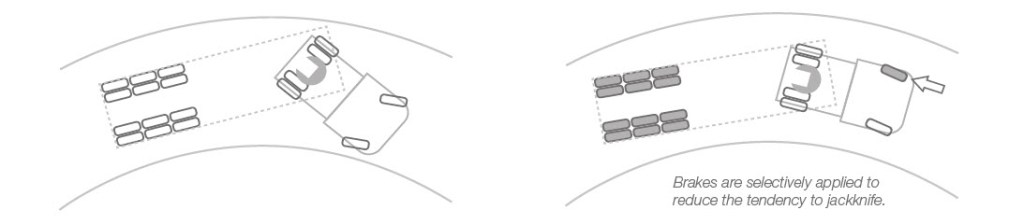
Anti-locking braking systems stop your wheels from locking up when you apply the brakes, this allows for the driver to maintain control without the vehicle skidding. While the ESC system is able to apply the brakes to individual wheels to help maintain stability, particularly when the truck is at risk of jackknifing or spinning. This is done by the system automatically reducing the engine throttle and selectively applying the trucks brakes.

Cal-Lift is your source for Kalmar Ottawa Terminal Tractors. Learn more about Kalmar’s Line-up of products, then contact us at 800-322-5438 for a demo and quote.

CLARK Material Handling Expands Standard Warranty

LEXINGTON, KY – April 1, 2021 – CLARK Material Handling Company, a top-ten global manufacturer of forklift trucks and spare parts, announces an expansion of the CLARK standard warranty for Carriage to Counterweight and Powertrain coverage for up to three years.  Specifically, beginning April 1, 2021 the CLARK Protection Plan standard warranty now covers:

Full “Carriage to Counterweight” for two years or 4,000 hours, whichever comes first

Powertrain for three years or 6,000 hours, whichever comes first 

This warranty change actively demonstrates the high-quality engineering, manufacturing and componentry that goes into each CLARK product.  This new and expanded “bumper to bumper” standard warranty ensures that when purchasing a CLARK product, it is indeed “Built to Last.”

“CLARK customers have come to expect the highest quality from their CLARK forklift.  This new two-year/4,000-hour warranty is yet another way we’re standing behind the quality of our product and helping customers achieve their business and production goals,” noted Chuck Moratz, Senior Vice President of Engineering.

Intended to provide end-customers peace of mind when purchasing products for their business, the new CLARK Protection Plan two-year/4,000-hour warranty ensures that, on the off-chance, an electrical or mechanical issue arises with their CLARK forklift during that period, CLARK will be there for them.

To complement this expanded standard warranty, CLARK has also released new optional warranties for which information is available through CLARK dealers. 

“In the Material Handling Industry, as with many industries, truck down time is a big issue – especially now with the consumer market as it is,” commented Moratz.  “Our new and expanded warranty lets our customers know they can buy with confidence when they buy a CLARK.  We stand with our customers as we are ‘Built to Last.’”

Visit our CLARK Material Handling Showroom.

CLARK WPL40 Lithium Ion Powered Electric Pallet Jack

CLARK’s new WPL40, a 4,000lb. capacity, Lithium Ion powered electric pallet jack

FEATURES

PIN-WHEELING

With the handle in the fully upright position, the WPL40 pin-wheels in and out of tight spaces using a smaller, tighter turn-radius and moves up to 4,000 lbs in close-quarters with ease.

HYDRAULICS

The permanent magnet DC pump motor and chrome-plated lifting cylinder provides for smooth and efficient lifting, as well as greater durability.

BRAKES

The electromagnetic brake, mounted on the motor armature shaft, multiplies the braking power through the transmission and provides good stopping power when the control tiller is raised to the full vertical position or lowered to full horizontal position beyond the operating range. Additionally, the armature-mounted brake design:

  • Keeps the braking mechanism clear from dirt and debris
  • Automatically engages the parking brake when the truck stops and the handle is released
  • Features an anti-rollback and neutral braking system for improved safety in operation

ERGONOMIC STEER/CONTROL HANDLE

With travel, lift and lower functions all located in an ergonomic operator handle, operators can access all controls without having to lift a hand from the handle. Additionally, the WPL40 control-handle includes:

  • A solid steel tubing control tiller arm and control handles meant to outlast cast aluminum or plastic designs
  • Angled control handle grips allowing easy operation with either hand
  • An emergency reversing switch, thumb control, and horn — all standard
  • The low-mounted tiller arm supports minimum steering effort for greater operator comfort
  • The gas-assisted spring gently returns the control tiller arm to a vertical position
  • Crawl speed switch enables the operator greater-ease-of-use in tight spaces

FORK DESIGN WITH TAPERED TIPS

The WPL40’s fork construction and pallet entry slide system, which allows a lifting of the forks up-and-over the bottom board, provides easy pallet access. The forks, at 27” OAW x 46.0 OAL, can achieve a maximum elevation of over 7.5”. The shape of the load wheel housing or toe box, ensures pallet entry and exit can occur without the need for wearable rollers.

48-VOLT LITHIUM-ION BATTERY POWER OUTPUT

The Lithium-Ion 48-Volt battery provides the same power-output all the way through the charge cycle — giving the operator the same power during the first 10% of the charge as the last 10% as well as surpassing the truck charge power from similar lead-acid batteries.

ELECTRICAL COMPONENTRY

The water-resistant connectors and shrouded wiring harness supply power reliably to key components. The WPL40 system includes a key switch, emergency power disconnect, and onboard dock for Easy Exchange Battery.

SERVICEABILITY

The removable covers and the modular design of the WPL40’s components provide for easy maintenance with simple hand tools. And the two-piece drive wheel reduces the complexity of tire changes.

GEAR TECHNOLOGY

The state-of-the-art optimized gear technology supplies advantages such as low noise level, high efficiency, and high performance.

MAINTENANCE

The fully adjustable pull rods and torsion bar extends the WPL40 operating life in delivery truck and dock use applications. The WPL40 goes further with easily accessible grease zerks for easier maintenance.

For more information or a quote on the WPL40, please contact us at 800-322-5438.

When is it Time to Update Your Equipment?

Even a well-maintained forklift fleet needs to be replaced at some point in time. Knowing exactly when can be a difficult thing to ascertain. Industry averages reveal that somewhere between 8,000 hours and 10,000 hours of use is when you’re going to reach an optimal point to replace your forklifts. Some questions to ask to help determine if it is time include:

  • What type of operation does each forklift perform each day? Does your forklift face harsh conditions like heat, dust, rough terrain or any other condition that would put undue stress on the engine, transmission or hydraulics?
  • Is your forklift put to the test each and every lift, lower and transport? Does it handle its maximum capacity more than half the time, or less?
  • Does your forklift do a lot of starting, stopping and backing up? Does it frequently conduct long runs in large open areas?
  • Have you adequately maintained the equipment using a regularly scheduled Planned Maintenance Program?
  • How has the cost of repairs for each unit changed over the past two to three years? A dramatic increase in repairs (not normal planned maintenance or normal wear parts) can indicate that you’re spending more than you should on repairs. A cost-per-hour analysis may be in order.

The not-so-obvious costs associated with worn forklifts is downtime, lost productivity and the short-term cost of replacing them with rentals. These costs may not show up on a unit’s cost per hour, but they are costs nonetheless. Keeping count of rentals due to downtime and repairs is essential in determining replacement, as new forklifts will all but eliminate your rentals due to downtime.

There are other reasons that may eliminate the guesswork and actually require you to replace your aging fleet:

  • Safety features are outdated and cannot be updated properly. For example, safety requirements may change and a new safety harness system would replace traditional seatbelts. Also, if safety options have improved fleet safety and the cost to update them would be prohibitive, it would be a good time to consider replacement.
  • If your forklifts are exhibiting signs of unsafe operating conditions like hydraulic failure, equipment shaking or jerking or leaking components, it’s likely time to replace the units.

Another reason to consider updating your forklift fleet are improvements in technology, hardware or performance. For example, now that electric forklifts have become more powerful and reliable outdoors, it could be a great time to consider replacing your IC forklifts.

As you can see, looking at the hour meter is not the sole solution that it used to be to consider replacement. We would be glad to consult with you to assess your fleet condition and help you determine if now is a good time to consider your forklift fleet retirement or replacement. Check out our line-up of new forklifts and terminal tractors, then give us a call at 800-322-5438 for a demo and quote.

Determining the Best Time to Replace Your Material Handling Equipment

Even a well-maintained forklift fleet needs to be replaced at some point in time. Knowing exactly when can be a difficult thing to ascertain. Industry averages reveal that somewhere between 8,000 hours and 10,000 hours of use is when you’re going to reach an optimal point to replace your forklifts. Some questions to ask to help determine if it is time include:

  • What type of operation does each forklift perform each day? Does your forklift face harsh conditions like heat, dust, rough terrain or any other condition that would put undue stress on the engine, transmission or hydraulics?
  • Is your forklift put to the test each and every lift, lower and transport? Does it handle its maximum capacity more than half the time, or less?
  • Does your forklift do a lot of starting, stopping and backing up? Does it frequently conduct long runs in large open areas?
  • Have you adequately maintained the equipment using a regularly scheduled Planned Maintenance Program?
  • How has the cost of repairs for each unit changed over the past two to three years? A dramatic increase in repairs (not normal planned maintenance or normal wear parts) can indicate that you’re spending more than you should on repairs. A cost-per-hour analysis may be in order.

The not-so-obvious costs associated with worn forklifts is downtime, lost productivity and the short-term cost of replacing them with rentals. These costs may not show up on a unit’s cost per hour, but they are costs nonetheless. Keeping count of rentals due to downtime and repairs is essential in determining replacement, as new forklifts will all but eliminate your rentals due to downtime.

There are other reasons that may eliminate the guesswork and actually require you to replace your aging fleet:

  • Safety features are outdated and cannot be updated properly. For example, safety requirements may change and a new safety harness system would replace traditional seatbelts. Also, if safety options have improved fleet safety and the cost to update them would be prohibitive, it would be a good time to consider replacement.
  • If your forklifts are exhibiting signs of unsafe operating conditions like hydraulic failure, equipment shaking or jerking or leaking components, it’s likely time to replace the units.

Another reason to consider updating your forklift fleet are improvements in technology, hardware or performance. For example, now that electric forklifts have become more powerful and reliable outdoors, it could be a great time to consider replacing your IC forklifts.

As you can see, looking at the hour meter is not the sole solution that it used to be to consider replacement. We would be glad to consult with you to assess your fleet condition and help you determine if now is a good time to consider your forklift fleet retirement or replacement. Just give us a call at 800-322-5438. Visit our website to see our new forklift line-up.